Hiring for a future shaped by AI and change
)

Posted: Wed 10th Dec 2025
Last updated: Wed 10th Dec 2025
9 min read
If hiring feels harder than ever, you're not alone. For many small business owners, the question is no longer whether to hire, but whether they can afford to get it wrong.
According to a recent Totaljobs survey, nearly half of UK small businesses say they don't have the budget to hire, and two-thirds are struggling to find the right people with the right skills.
Add that to a rapidly changing labour market – with AI reshaping job roles, economic uncertainty and employee expectations evolving faster than we can adapt – and it's easy to see why recruitment has become one of the most stressful, yet strategic, decisions a small business can make.
"You can't afford to make mistakes," says Rebecca Hopwood, founder of Leeds-based marketing agency Youbee Media, adding that while recruitment has always been costly, the stakes have never been higher.
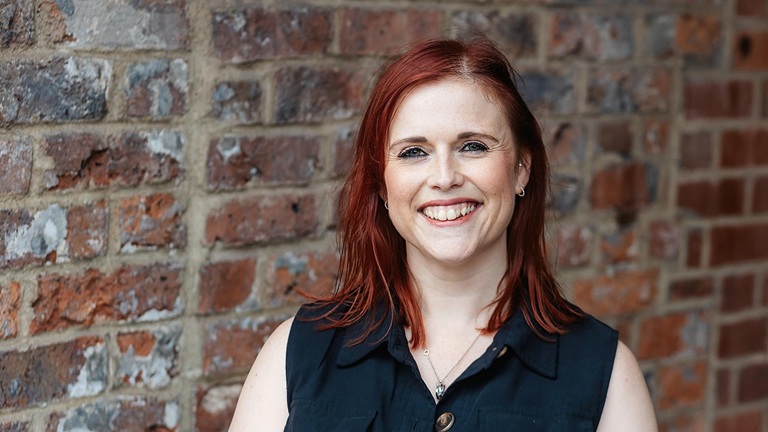
Building a team that can weather the storm
For Rebecca, who's been running a lean, four-person team for five years, the key isn't just searching for someone who can tick boxes on a job description. It's hiring for long-term adaptability and potential.
She explains:
"When you're in such a small business, there's no such thing as hiring for a role.
"You're hiring somebody to be in the team, and that means they have to be adaptable.
"They have to be flexible, they have to know that some days they could be doing something repetitive, and the other day it might be something completely different."
With roles and expectations changing faster than ever, that emphasis on adaptability is no longer just good practice – it's essential.
A 2025 study by the National Foundation for Educational Research (NFER) has warned that AI and automation could remove up to three million UK jobs by 2035, particularly in occupations that rely on routine tasks.
For small businesses, this trend could mean hiring someone who can pivot and grow with the company is more valuable than someone who might only have the skills to fit today's role.
As Ben Keene, founder of Good with AI, puts it, perhaps "the skillset we need now more than ever is entrepreneurship".
He says:
"That doesn't mean that we need another million people in the UK to start companies.
"What it means is that we need everyone to be thinking, How do I create things from scratch? How do I get my first customers? How do I adapt to changes quickly? How do I build my resilience?"
Those are the kind of skills, Ben adds, that will help businesses continue to weather the storm of uncertainty with strength.
Flexibility as a superpower
Confidence, however, remains an issue. The latest Talent Hub report, Unlocking Talent for Growth, suggests that only 33% of business owners feel confident about hiring again, with 75% citing a lack of training resources as one of the main barriers.
To make sure every investment in recruitment contributes to long-term growth rather than becoming a costly mistake, Rebecca says, curiosity can be a business owner's best friend.
"Always just question, why are we doing that? What does it mean? Why do we do it and could we do it this way? What are the options? What else is out there?"
Rebecca suggests that while a larger team might seem appealing, it does come with added responsibilities.
From managing more people to higher salaries and extra administrative work, navigating such change in a period of uncertainty isn't always feasible.
In the past, she's instead chosen to focus on identifying freelancers and experts who can step in on certain tasks when needed, maintaining a small core team while building a flexible network that can expand or contract depending on the workload.
And she's not the only one. Many UK businesses are including freelance talent in their workforce.
Indeed, recent data from Mode Insurance shows that about 42% of UK firms now use flexible freelancers to meet changing demands.
But whether you're on the hunt for full or part-time employees, Melissa Gauge, founder of virtual fractional support service SpareMyTime, says personality and culture fit should be front and centre of the process.

Future-proofing beyond the job description
Personality shapes how someone operates at work and can show whether they'll truly "fit in", Melissa explains.
And when employees feel comfortable with the culture, they engage fully, invest in the team and grow alongside the business – creating a cycle where both the individual and the company thrive.
But that balance isn't always easy to find in the market. Many small businesses report struggling to source candidates who combine the right mix of technical and soft skills.
At the end of the day, how do you even begin to measure what can't be measured? Potential isn't a number – it's a sense, a risk, a belief in what someone can become.
While some of these "soft skills" are hardly quantifiable on something like a CV or job application, Melissa says, they can often shine through in interactions like interviews where self-awareness, curiosity and engagement can signal whether they're likely to thrive.
"It's actually one of the things we look for in our employees – the people who are incredibly self-aware, and that's easier to pick up on in an interview.
"In my experience, people who are self-aware and sort of interested in who they are tend to be also interested in how they can improve."
But it doesn't stop there, Melissa adds, because recruitment is a two-way process.
And as both employers and employees continue to navigate the future of work with caution, clear communication between the two has never been more important.
She explains:
"Invest time in making sure that whoever it is you're bringing into your business has time to be onboarded and has a really, really, really clear understanding of exactly what 'good' looks like to you.
"Because they could be fantastic at whatever it is you've hired them for, but they've never done it in the context of doing that for you."
Perfection is the enemy of progress
Taken together, these insights show that future-proofing your team isn't about finding the "perfect hire" or filling yet another role.
It's about building a team and a network and maintaining the curiosity needed to make sure your business is ready for whatever the ever-changing world of work throws next.
And if there's any advice Melissa were to give a small business owner looking to hire today, it's as simple as being as transparent and realistic as you can.
"Everybody I know who recruits tends to be hoping to recruit Mary Poppins – somebody who's excellent and practically perfect in every way. But those people don't exist.
"We're not those people, so why should we expect other people to be like that?"
This is the second in a series examining how AI is reshaping small businesses, from adapting new skills and redefining talent to accelerating adoption across industries. Read the first blog

Find, attract, recruit and train talent to fuel your company's growth
Want to know when and how to hire people into your business? Sign up to Talent Hub for free support with hiring staff, and recommendations on your next steps. Join now
You might also like…

Get business support right to your inbox
Subscribe to our newsletter to receive business tips, learn about new funding programmes, join upcoming events, take e-learning courses, and more.
Start your business journey today
Take the first step to successfully starting and growing your business.
Join for free