The new research from Tech Hub – a partnership between Enterprise Nation, Google, Sage, Dell Technologies and Square – finds that only one in five of the UK's 5.7 million small businesses are using AI regularly, indicating a widening gap as larger businesses race ahead.
Key findings from the report
The research found that while small businesses have broadly adopted everyday digital tools, real AI use remains at an early stage.
Unlike AI outliers like Denmark – where, according to the IMF, adoption in young enterprises sits at 42% – just of small businesses in the UK use AI regularly, including only that have embedded it into daily work across the business.
21%
6%
By contrast, 57% of SMEs now describe themselves as highly or moderately digital.
This suggests that the UK's next challenge is not basic digital awareness, but helping firms turn familiarity with technology into meaningful AI adoption – or risk lagging further behind other nations.
On comparable measures, our small firms are mid-table among advanced economies: level with the EU and the United States, but behind the Nordic leaders, where over a third of firms use AI.
Enterprise Nation's figure of 21% sits alongside the government's own research, which puts adoption at around one in six. The risk isn't that we've fallen behind, but that we drift while others pull ahead.
What I find interesting is that this gap isn't about willingness. Among the firms that have started with AI, two-thirds say their use has grown in the past year. Once founders try it, they tend to keep going.
The worry lies in who hasn't started. The smallest firms are furthest behind, with 34% of one-person businesses using AI against 68% of larger ones. Left alone, that's a divide that gradually widens.
Chancellor of the Exchequer, Rachel Reeves, says:
"We know that many businesses want to use AI but don’t yet have the tools, support or confidence to do so – holding back productivity and growth.
"That’s why this week we announced a major nationwide boost for AI adoption – from a £200 million investment in training, to agreements with trade unions to train workers, support small businesses and open up opportunities for young people.
"New advisory Growth Labs and industry-led AI Adoption Plans will also support firms. Our economic plan is the right one, and it puts AI and innovation at the heart of driving growth and national renewal."
Polly Dhaliwal, chief operating officer of Enterprise Nation, says:
"Small businesses are where the UK’s AI ambitions will either become economic growth or remain a policy aspiration.
"Our research shows firms are already embracing digital tools, but many have yet to make the leap from experimenting with AI to using it regularly and confidently.
"There's a real risk of a new divide opening up between businesses already benefiting from AI and those that have not yet been able to unlock its potential.
"For small firms, even a few hours saved each week can be transformative, boosting productivity, growth and resilience. If the UK wants to lead on AI, support must reach the millions of small businesses that power local economies and create jobs.
"The opportunity is enormous, but unless more firms are given the confidence and support to adopt AI, the benefits will be concentrated among a relatively small group of businesses rather than shared across the wider economy."
How AI adoption looks across the country
Adoption is uneven nationwide, too. London and Scotland are out in front on AI, while places like the North East are further back.
Where a business is based should not decide whether it gets to use these tools.
The things holding firms back will sound familiar to anyone running a business. Cost comes first (cited by 53%), then a lack of skills (46%). Many simply want to see proof that it works before they spend money on it.
Time is the other barrier. More than a third say they can't find the hours to learn and set new tools up. But when you're running everything yourself, that's completely understandable.
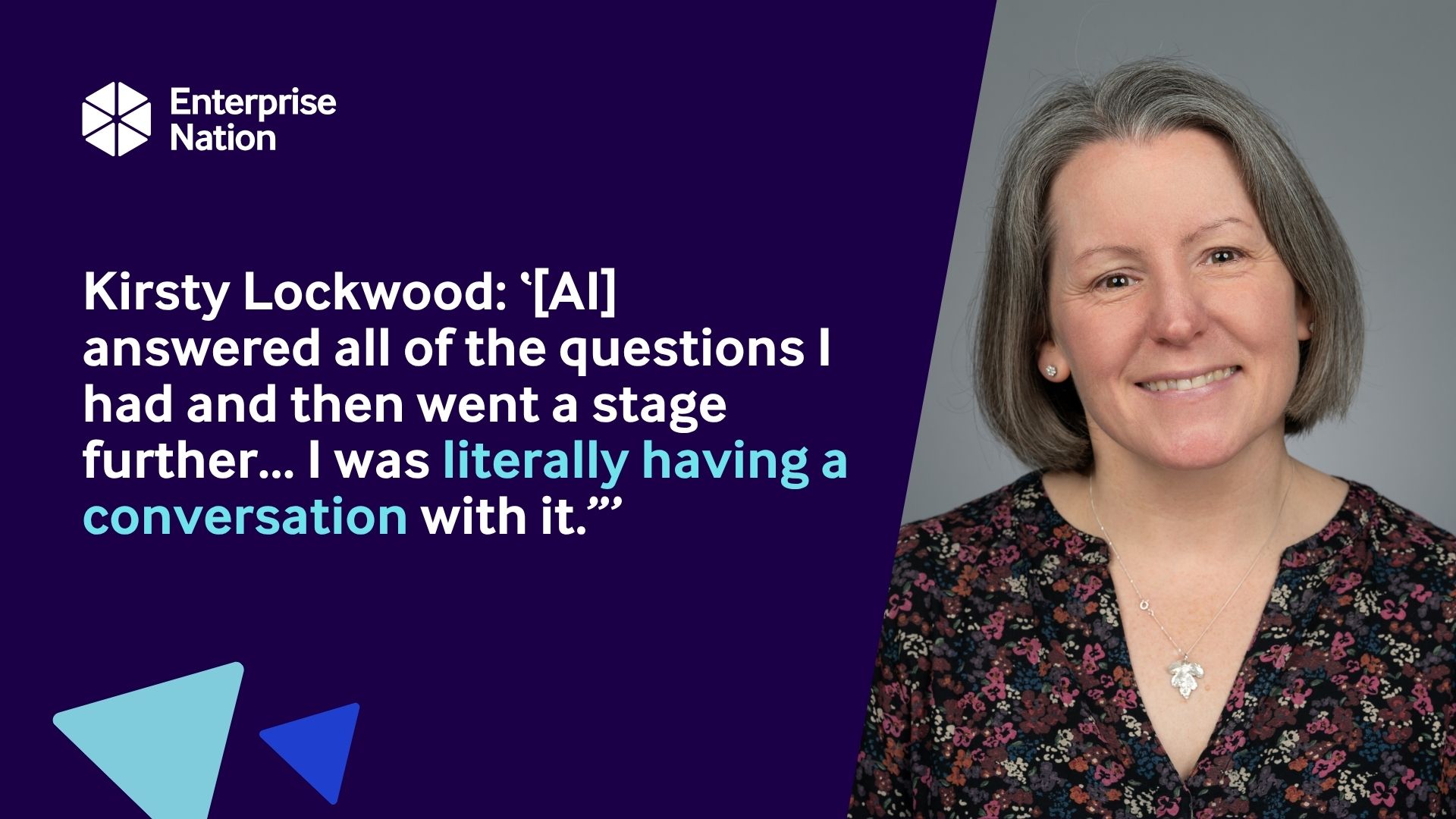
Enterprise Nation member Kirsty Lockwood runs a specialist upholstery microbusiness from Knighton in Mid-Wales, serving both local and national clients.
What started as a traditional craft business has been transformed through her strategic adoption of AI tools.
"I have to be everything for the business, and I have to be an expert in everything."
"For 15 years, I've had to compromise on parts of the business and not spread myself too thin. I've often found that if you don't know what you're looking for on the traditional internet search, you don't get good results back."
Kirsty's breakthrough came when she realised AI could bridge that knowledge gap.
"Now suddenly I can say to AI: this is what I want to achieve, this is the information I do know and the parameters I have. Help me with the rest."
AI guided her through choosing the right business structure and creating governance documents. It even helped her develop a £30,000 National Lottery grant application.
She continues:
"It answered all of the questions I had and then went a stage further, asking me, 'Have you thought about this governance document? Would you like me to help you write that policy?' I was literally having a conversation with it.”
The bigger picture
When small firms adopt the right tools, they tend to grow faster, keep their staff and weather hard times better.
Multiply that across the country, and it's one of the simplest routes to growth we may have.
There's real encouragement in the detail, too. Among the smallest firms using AI, more than a quarter say it saves a typical member of staff five hours a week or more.
The uses are refreshingly down to earth. Founders reach for AI to do research, write and tidy up content, and make sense of their numbers. These are practical uses rather than hype.
When a small business wants advice on technology, 64% turn to their accountant and 56% to an online search. Just 22% would turn to the government.
It's clear that trusted, practical help isn't reaching founders through official channels. If we want adoption to rise, we have to meet people where they already are.
He's witnessed first-hand how AI can transform business operations when implemented strategically.
The company provides fractional sales directors to businesses that need affordable specialist sales expertise but can't justify a full-time hire.
It uses sophisticated AI-powered tools that most companies couldn't justify developing or deploying internally.
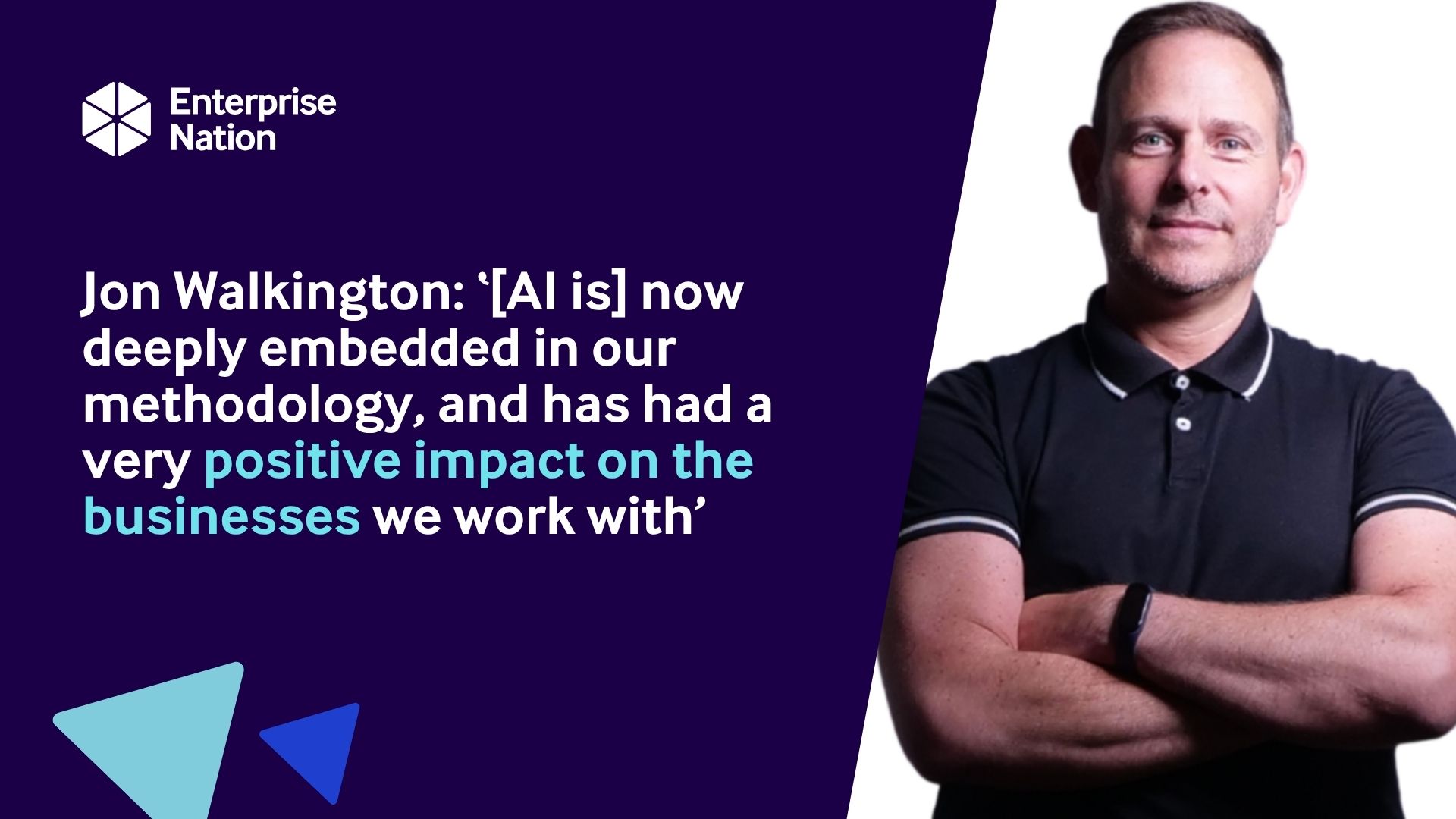
Jon explains:
"We use AI on a daily basis. It's now deeply embedded in our methodology, and has had a very positive impact on the businesses we work with."
The company recently launched YSD Core, an AI-enabled evolution of the firm's Your Sales Director framework, strengthening the impact, consistency and capability of its fractional sales director services.
Launching the report
We published this report to mark London Tech Week, and for one simple reason. We wanted an accurate, honest read on where small firms really stand on digital and AI.
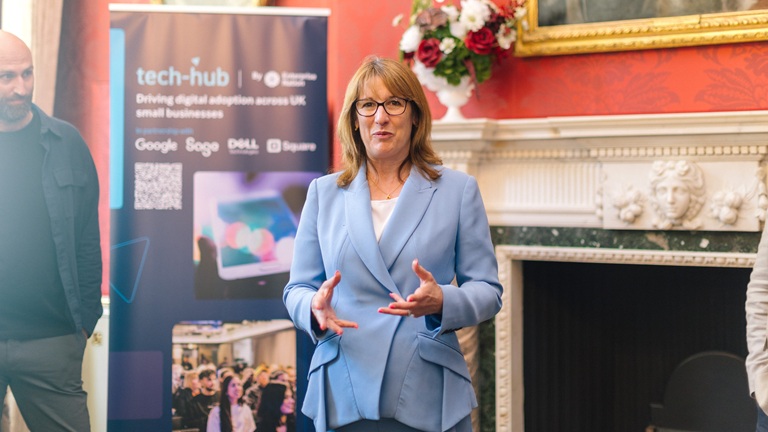
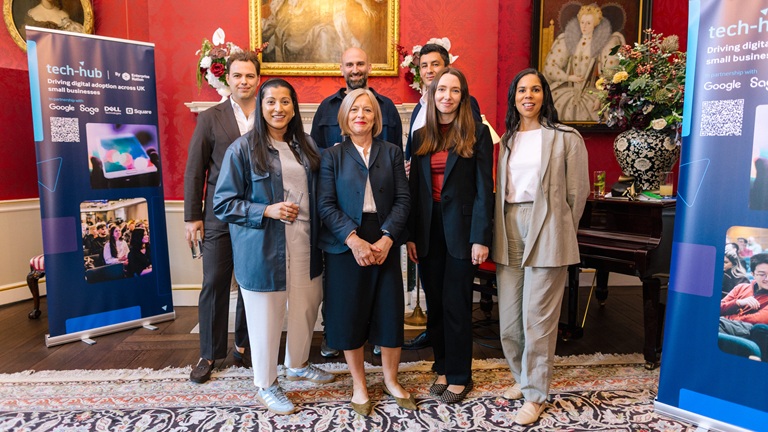
We launched the report at a reception at 11 Downing Street, hosted with HM Treasury. The Chancellor of the Exchequer, Rachel Reeves, delivered a keynote, joined by small business owners and our Tech Hub partners.
Tech Hub gives every small business one free place to find the right digital and AI tools. You answer a few short questions, get a plan made for your business, and get guides, webinars and expert support to act on it.
We built it with Google, Sage, Dell Technologies and Square, and up to now nearly 90,000 people have used it.
The thought I leave you with is a hopeful one. The hardest part, getting comfortable with digital tools, is largely behind us. AI is the next step, and it's more within reach than the headlines suggest.
You don't have to take that step alone.
Read the full AI adoption report
Learn more about how small businesses across the UK are getting to grips with AI technology, in this new research from Enterprise Nation. View the report
With 10 years' experience working in politics, developing policy and leading strategic campaigns, Daniel Woolf leads on policy and government relations for Enterprise Nation.
Daniel began his career leading on health and policing and crime policy at the Greater London Authority while advising London's Deputy Mayor. He then moved to the CBI to lead its work on infrastructure finance. Most recently, Daniel played a leading role in AECOM's Advisory Unit, providing political and strategic policy advice to government bodies.
)