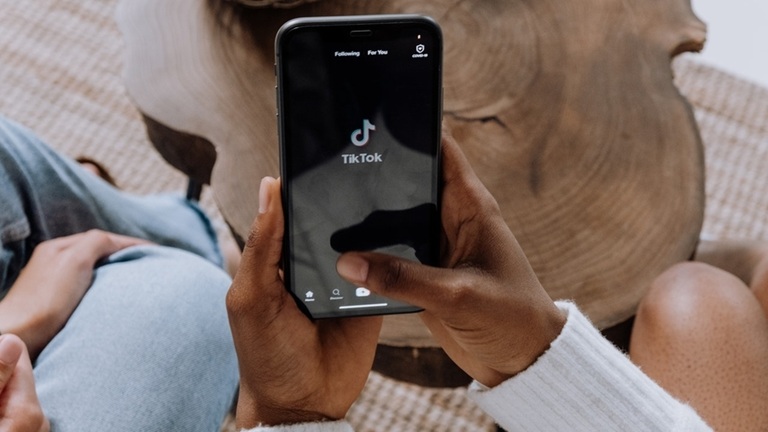
TikTok is no longer the new app that brands are testing on the side.
It's a place where people search, compare, ask questions, find products, check out founders and decide whether a business feels worth trusting.
That's handy if you're building something new. You may not have a big budget, a shopfront or years of reviews behind you. TikTok can help people understand what you sell and who's behind it quickly.
Ofcom's 2025 Online Nation report says 56% of online adults in the UK visited TikTok in May 2025, with people aged 18 to 34 spending 49 minutes a day on the platform.
But views alone won't pay your bills. A video going wider than expected is useful only if the right people see it and know what to do next.
Most young founders already know how TikTok works as users. Using it for business takes a different mindset.
You're still making content, but every post should help someone understand the problem, trust your offer or move one step closer to buying.
This guide shows you how to use TikTok with more purpose – how to decide whether it's worth your time, set up your profile, plan content, use search, sell through the right route and measure whether it's helping your business.
In this guide
1. Is TikTok worth it for small businesses?
TikTok can be worth using if your customers spend time there, your product or service can be shown clearly and you can create useful content without burning yourself out.
It works well for:
product demos
founder-led stories
tutorials
customer questions
local discovery
reviews
behind-the-scenes content
short videos that explain something people keep asking about
It won't be the right channel for every business.
If your customers are elsewhere, or if your TikTok activity never leads to enquiries, sales or useful conversations, another platform may deserve more of your attention.
2. What TikTok can do for a young business
TikTok can help a small business get found by people who would never search for the brand name because they don't know it exists yet. That's useful when you're new.
The kind of content you post on TikTok can build trust because people can see the work.
TikTok can also help you test demand. Before you commit to a big stock order, launch a full website or spend money on ads, you can post a product idea, show a prototype or explain a service and see what people ask.
If the same questions keep coming up, that tells you something. If no-one reacts, that's also very useful.
A small but interested audience is worth more than a large audience that never buys.
3. Is TikTok the right platform for your business?
Audience fit
Start with the customer.
Are they using TikTok to look for products, services, tutorials, reviews, ideas or local recommendations?
Are similar businesses getting comments from people who sound like potential customers?
Are people asking questions your business could answer in short videos?
Don't assume TikTok is right because you use it yourself.
Your customer might be active on Instagram, Google, LinkedIn, YouTube, marketplaces or local Facebook groups instead. Go wherever the customer is.
Product or service fit
TikTok tends to work well when people can see or quickly understand the value.
That doesn't mean you need a beautiful physical product. A service business can still work well if you show the process, the result, the tools, the common mistakes or the questions customers ask before booking.
A candle brand, for example, has obvious visual options – pouring wax, testing scents, packing orders, showing room styling.
A bookkeeping service has to work harder, but it could still create useful content around pricing, tax deadlines, common mistakes and what clean records actually look like.
Founder fit
Do you have time to post regularly? Can you handle public comments without taking every response personally?
Are you happy being on camera, or would faceless content suit you better? Can you talk about the business without feeling as if you're performing a character?
You don't need to share your whole life to get customers trusting you. But you must show enough for people to understand your business and feel confident taking the next step.
Business fit
Before you start posting properly, decide what you want TikTok to do. If you don't know what success looks like, you'll end up chasing whatever number looks biggest.
4. Setting up your TikTok profile properly
Your profile needs to make sense within a few seconds. A new visitor should be able to tell what you sell, who it's for and what to do next.
Choose the right account type
TikTok offers different types of account, including business accounts.
A business account can give you access to business features and analytics, but it may affect things like music access. TikTok's Commercial Music Library is designed to give businesses access to pre-cleared music for content on the platform.
Check the current account settings before you decide. TikTok changes features often, so don't rely on an old tutorial.
Make your bio clear
A clever bio is useless if no-one can work out what you do. Keep it short and specific.
For example:
"Handmade silver jewellery from Manchester. New drops every Friday."
"Video editing for cafés, salons and student founders. DM for packages."
"Affordable prints for uni rooms and first flats. Shop below."
You can still have personality. Just don't hide the business behind an in-joke.
Add the right link
Your link should match the action you want people to take. That might be visiting your website, TikTok Shop, Etsy, Depop, Shopify, a booking page, an email sign-up form or a waitlist.
If you use a link-in-bio tool, keep it tidy. Too many options can slow people down.
If your latest videos are about a new product drop, link to that product. If you're trying to get bookings, link to the booking page. Make the next step obvious.
Use pinned videos
Pinned videos are useful because many people will visit your profile after watching one post. Don't make them work too hard.
A good set of pinned videos might include one that explains what you sell, one that shows proof such as reviews or customer results and one that explains how to buy, book or enquire.
Think of pinned videos as the shop window. They should answer the questions a new visitor is most likely to have.
Add trust signals
Trust signals are small details that make the business feel real.
Use a clear business name. Add your location if it matters. Show how people can contact you.
Mention delivery, booking or turnaround times where useful. Share reviews, testimonials or customer feedback with permission.
If you're selling a service, show your experience. If you're selling a product, show the product properly – size, texture, packaging, finish and what customers actually receive.
5. Planning how you'll use TikTok
A good TikTok strategy will stop you posting random content and hoping the algorithm sorts it out. So here's what to do.
Pick one main goal for the next month
Keep it practical. You might want to get 10 enquiries, sell 20 items from a small drop, fill five appointment slots, build a waitlist before launch or find out whether people care about a new idea.
Decide what you want people to do after watching
Do you want them to follow you? Comment? Share? Save the video? Click the link? Visit the shop? Book? Send a DM?
Not every post needs a hard sell. But every post should have a reason to exist.
Choose your content pillars
Content pillars are the main types of posts you return to because they help customers understand, trust or buy from you.
Choose four or five to start with. You might use:
product or service demos
customer questions
behind the scenes
proof, reviews and results
your founder story
education or tips
launch updates
packaging, delivery or process
local or community content
The pillars keep you focused. They also make planning easier when you have a busy week and don't know what to post.
Set a realistic posting rhythm
You don't need to post five times a day. Do that and you'll soon run out of ideas and start hating the platform.
Start with a rhythm you can keep for a month. Three to five videos a week is enough to learn what people respond to without letting TikTok take over the business.
Batch filming can help. Film several short clips while you're making, packing, editing, preparing for a market or setting up a client project.
Save customers' questions as content ideas. Keep a note on your phone for phrases customers use, because those phrases often make strong hooks.
Leave room for quick replies too. A good comment can become tomorrow's video.
6. What should a small business post on TikTok?
This is where many founders get stuck. They know the platform, but business content feels different from personal posting.
The easiest way through it is to stop asking "What should I post?" and start asking "What does my customer need to see before they trust this?"
Product-based business ideas
Show the product in use. Show the size, texture, colour, fit or finish. Pack an order. Explain who the product is for. Compare options.
Show what changed after customers gave feedback. Answer questions about delivery, care, sizing or how the product was made.
People want to know the detail. A polished image of a product might get attention, but it's the practical information that helps people buy.
Service-based business ideas
Services can work well on TikTok when the content makes the value plain to see.
Show before-and-after work. Explain a problem you solve. Answer a client's question.
Break down your process. Show tools you use. Talk through pricing in simple terms. Explain what happens after someone books with you.
You don't need to reveal details about your clients. Just focus on the work, the thinking and the results.
Local business ideas
If your business depends on local customers, say where you are. Use local words in speech, captions and on-screen text where they fit naturally.
A barber in Birmingham, a nail artist in Cardiff or a vintage seller near a university in Leeds shouldn't sound as if they're trying to reach everyone.
Local content can be more useful than broad content because it reaches people who can actually buy.
Show the area, markets, campuses, high streets or events that matter to your customers. Collaborate with nearby businesses.
Make videos that answer local questions, such as where to find last-minute gifts, how to book a student-friendly appointment or what to expect at a local pop-up.
Founder-led content
People often want to know who's behind a small business. But that's not to say every video has to become a diary.
Founder-led content works best when it connects back to the business.
Why you started
What you wish customers understood
A mistake you made with your first product drop
A problem you solved this week
How you decide what to launch next.
A founder story can help build trust, but keep it useful. Sharing everything can become draining. Choose the parts that help people understand the work.
Faceless content
You don't have to show your face. It can help, but don't think it's compulsory.
Faceless content can use hands-only demos, screen recordings, voiceovers, product close-ups, packing videos, desk shots, text-led clips or simple animations.
If being on camera stops you posting at all, start faceless. You can always change later.
VIDEO: Getting started with TikTok for business
In this session, marketer Rebecca Hopwood walks you through five simple, actionable steps that you can implement on TikTok right away.
To view this content, please accept marketing cookies.
7. How to make videos people keep watching
TikTok gives you more room than it used to. Videos recorded in the app can be up to 10 minutes and uploaded videos can be up to 60 minutes.
But longer isn't always better. The length of your video should follow the idea.
A product reveal might need only eight seconds, but a tutorial might need 90. A proper breakdown of a service or a customer's problem might need several minutes.
The right length is the shortest version that says the useful thing properly.
Start with the first two seconds
The opening needs to give people a reason to keep watching.
Be specific. "You need to hear this" is weak unless what follows is genuinely useful. Stronger openings usually point to a clear person, problem or result.
Examples:
"I made this necklace because customers kept asking for one they could wear every day."
"Three things I'd change if I was starting my first market stall again."
"This is what £35 gets you in a one-hour brand shoot."
"Here's why your brownies keep sinking in the middle."
Get to the point as quickly as you can.
Keep one video to one idea
Don't explain your whole business in every post. One video can answer one question, show one product, explain one mistake or prove one result.
Cut the build-up. Show the thing quickly. Use on-screen text to guide people. If there's a next step, say it clearly.
A video about "how we pack orders" doesn't also need your full founder story, pricing structure and business plan. Save those for other posts.
Use sound carefully
Sound can help a video, but many people watch with the volume low or off. Use captions or on-screen text so the point still gets across.
If you use a business account, check music rules before using popular sounds. Use TikTok's approved music options for commercial content rather than assuming any sound is safe.
Voiceover can work well because it adds personality without needing a face-to-camera set-up.
Keep it natural. A slightly imperfect voiceover is often better than something that sounds read from a corporate script.
Make videos accessible
Readable captions help more people follow the video. Use clear on-screen text, decent contrast, simple framing and audio that people can easily understand.
Avoid tiny text and flashing too much information too quickly.
8. How to use TikTok search so the right people can find you
People use TikTok to search for products, tutorials, reviews, local recommendations and answers. That means your content needs to use the words your customers actually use.
Think about what someone might type before buying from you.
"Liverpool lash tech"
"best gifts for uni students"
"how to style silver rings"
"small business packaging ideas"
"freelance designer pricing"
"Bristol vintage market"
Use those phrases naturally in your video, on-screen text, caption and bio where relevant. Don't force them into every sentence.
Hashtags still have a place, but don't rely on them to do all the work. Use a few relevant ones. Mix broad and specific tags. Add location or niche hashtags where they help.
Avoid filling captions with generic tags that bring attention from people who are unlikely to buy.
9. Trends – they can help, but don't let them run the business
Trends can give you reach. They can also pull your account into random content that has nothing to do with the business.
Use trends carefully. Before you follow one, ask whether it can show the product, answer a customer's question, make a common problem clearer or give people a better feel for your point of view.
If the trend needs too much explaining, skip it. If it attracts people who will never buy, skip it. If it makes your business feel less trustworthy, skip it.
TikTok's Creative Center can be useful for studying trends, popular content and ad examples.
Use it to understand what's working on the platform, then adapt the idea properly for your customer and offer.
Copying the surface of a trend rarely builds a strong business account.
10. Turning comments into content and customers
Comments are one of the most useful parts of TikTok for small businesses. They show you what people don't understand yet.
You can reply to real questions, or turn repeated questions into videos. Pin useful comments if they help new viewers. Save objections as ideas for content.
If people keep asking how much something costs, your content or profile might not be clear enough. If they ask whether you ship to certain places, make a delivery video.
If they ask how long a service takes, answer that in a short post and link it to your booking process.
Handle negative comments carefully. Ignore obvious bait and correct misinformation calmly. Move customer service issues to email or DM if personal details are involved. Don't get pulled into public arguments from the business account.
For young founders, comments can feel personal. Set a rule for yourself before the account grows – not every comment deserves your energy.
11. Selling through TikTok, your website or another platform
The original route for many small businesses was simple – post content, then send people somewhere else to buy.
That can still work. But TikTok now has shopping features too, so founders need to choose the route that makes sense for the business.
Do the maths. A sale is useful only if your price still works after you've factored in platform fees, payment costs, packaging, delivery, returns, stock, damaged items and your time.
Also think about customer service. Can you fulfil orders quickly? Can you handle returns? Are your product descriptions clear? Do you have enough stock if a video takes off?
A busy shop sounds like a nice problem until you're packing orders at 2am and losing money on postage.
VIDEO: How to use TikTok Shop successfully in 2026
From content creation and affiliates to ads and live shopping, hear how the different parts of TikTok Shop work together to drive visibility and conversions.
To view this content, please accept marketing cookies.
Sending people to your own website
Your own website gives you more control over brand, product pages, customer data, email sign-ups and repeat marketing. It can also make the business feel more established.
The weak point is that people have to leave TikTok, land on the right page on your website and know what to do next.
If your video shows one product, don't send people to a confusing homepage. Send them to the product, collection or booking page that matches the video.
They give you a ready-made selling route and customers may already trust them.
Check what fees and rules apply, and what customers expect. A marketplace can help you start faster, but you're also competing inside someone else's system.
Selling through DMs
DMs (direct messages) can work for early testing, custom orders or service enquiries. Keep track of messages and be clear about price, delivery, payment, timescales and what happens next.
DM selling gets messy when the business grows. If you keep losing track of orders, move to a clearer system.
Usage rights matter. If you want to use a creator's video on your own account, website or ads, agree that in advance.
Don't assume gifting a product gives you the right to use their content anywhere you like.
13. TikTok ads – should you use them?
Ads can help, but not if your content is unclear or your offer is weak.
They may make sense once you know which videos, products or messages get useful action organically. Ads can support a product drop, event, launch, seasonal push or proven offer.
Hold off on using ads if your profile is unclear, your shop page isn't good enough, you don't know your customer or you can't afford to lose the test budget.
Paying for reach before fixing the basics usually means more people seeing the problem.
If you do test ads, keep it small and specific. Test one offer, audience or creative angle at a time. Track clicks, enquiries, sales and profit, not just views.
A video with lots of views but no useful action is not doing the job you need.
14. Measuring TikTok engagement
TikTok gives you plenty of numbers. Some are useful, but some can be distracting.
Views can show reach.
Watch time and completion rate can show whether people stayed.
Saves and shares can show whether the content felt useful.
Comments can reveal questions, objections and interest.
But business numbers matter too.
Track profile visits, link clicks, shop clicks, enquiries, bookings, sales, waitlist sign-ups, email subscribers, repeat purchases and revenue.
Review your first 30 days properly and ask these questions.
Which videos brought the right people?
Which topics led to comments, messages or sales?
Which videos got views but no useful action?
Which format was easiest to make consistently?
Which questions kept coming up?
Then make decisions. Repeat what worked and cut whatever felt forced. Turn common questions into new posts. Improve the buying route if people clicked but didn't buy.
Don't change everything after one weak video. Look for patterns.
15. Rules and risks young founders need to know
TikTok can make a small business look bigger quickly. That's useful, but it also means you need to be careful with claims, ads, customer data and boundaries.
Make ads and paid partnerships clear
If you're paid, gifted a product, given a discount, using an affiliate link or have another commercial arrangement, make that clear.
Use clear labels. Don't hide disclosure in vague wording or a long caption.
Be careful with music and copyright
Use music, clips, images and audio you're allowed to use. Don't assume something is free because it's already on TikTok.
For business content, check TikTok's commercial music options and platform rules. If you use your own footage, images and audio, you reduce the risk.
Avoid misleading claims
Don't exaggerate results. Don't make claims about health, finance, beauty, performance or earnings unless you can back them up.
Be honest about delivery times, returns, product limits and what the customer will receive.
If you use testimonials, keep them accurate. Don't edit feedback so heavily that it changes the meaning.
Protect customers' data
Don't ask customers to put addresses, phone numbers or order details in public comments. Move personal details to a secure channel.
If your business stores or uses personal information, GOV.UK says you must follow data protection rules. That can include customer names, addresses and contact details, so collect only what you need and keep it secure.
Set boundaries
You don't have to reply instantly. You don't have to show your bedroom, your family, your relationship or your full daily routine to get people to trust you. You can choose what stays private.
Use comment filters. Block people when you need to. Report abuse. Decide when you'll check messages and when you won't.
A business account still belongs to a person. Protect your energy, especially if a video gets more attention than you expected.
A 30-day TikTok starter plan for young founders
Use the first month to learn, not to prove everything at once.
Week 1: Set the foundations
Choose one customer group and one business goal.
Tidy your profile.
Write a clear bio.
Add the right link.
Plan three pinned videos – what you sell, why people can trust you and how to buy or enquire.
Research 10 accounts in your niche or a related market. Don't copy them. Notice what people ask, what gets saved, what feels useful and what makes you trust the business.
Write down 20 customer questions you could answer.
Week 2: Post and observe
Post three to five videos. Test a few formats – a product demo, a customer question, a behind-the-scenes clip, a founder-led story or a quick tip.
Reply to comments.
Save useful questions.
Look at which videos held attention and which ones brought profile visits or messages. (Don't panic if the first few posts are quiet. You're gathering information.)
Week 3: Turn interest into action
Make the next step clearer. If you want sales, point people to the product. If you want bookings, explain how to book. If you want a waiting list, tell people why they should join.
Add proof. Show reviews, finished work, customer feedback, repeat orders or a short case study example.
Try one video that answers a buying question directly, such as price, size, delivery, turnaround time or what happens after someone books.
Week 4: Review and repeat
Look at the data and your own energy. Which posts brought the right viewers? Which formats were easiest to make? Which topics led to action? Which videos felt like a waste of time?
Choose what to repeat next month. Drop anything that brought the wrong audience or made the account feel random.
Then decide whether to keep building organic content, test TikTok Shop, try a small ad or speak to a creator. Don't add more moving parts until the basics are working.
TikTok for small business FAQs
Is TikTok worth it for small businesses?
It can be, if your customers use TikTok and you can explain your product or service in a way people understand quickly.
It's especially useful for product demos, tutorials, founder-led content, customer questions, local discovery and building trust. It works best when there's a clear next step after someone watches.
How often should a small business post on TikTok?
Start with a rhythm you can keep. Three to five videos a week for 30 days is often enough to learn what works without letting TikTok take over your life.
Quality and consistency matter more than posting constantly for a week, then disappearing.
Do I need to show my face on TikTok?
No. Showing your face can help build trust, but faceless content can work well.
Try hands-only demos, product close-ups, screen recordings, voiceovers, text-led videos, packing clips or process videos. If being on camera stops you posting, start without it.
Can I sell directly through TikTok?
Yes, if your business and products are eligible for TikTok Shop. It can help product businesses sell inside the app, but you need to check fees, fulfilment, returns, stock and margins before relying on it.
Should I use TikTok Shop or my own website?
TikTok Shop can make buying easier inside the app. Your own website gives more control over brand, product pages, customer data and repeat marketing.
Some businesses use both. The best choice depends on your product, margin, customer behaviour and how much control you need.
Are TikTok ads worth it for a new business?
Usually only once you have a clear offer, a strong profile and some evidence of what works organically.
Ads can increase reach, but they won't fix confusing content, weak pricing or a poor buying journey. Start with small tests and track the results.
What should I post first?
Post something that helps a new customer understand your business.
That could be a simple product demo, a clear explanation of what you sell, an answer to a common customer question or a short behind-the-scenes video showing how the product or service works.
How do I get more views from the right people?
Use language that customers specifically use. Say what the product or service is for. Use relevant keywords in speech, text and captions. Answer real questions. Avoid trends that attract attention from people who are unlikely to buy.
What should I measure on TikTok?
Track views, watch time, saves and comments, but don't stop there.
Look at profile visits, link clicks, shop clicks, enquiries, bookings, sales, repeat customers and email sign-ups.
The best metric depends on what you wanted TikTok to do in the first place.
Unlock the secrets to TikTok success with our email course
Want to receive TikTok Takeoff emails and learn how to get more customers noticing your brand? Sign up for free now!
I'm one of Enterprise Nation's content managers, and spend most of my time working on all types of content for the small business programmes and campaigns we run with our corporate, government and local-authority partners.
)