To view this video, please accept marketing cookies.
Posted: Thu 11th Jun 2026
Been working flat out for years and still feel like your business has hit a ceiling?
In this Lunch and Learn, Lisa Tennant shares how she spent 10 years trying to scale her business the hard way, before cracking it and building a six-figure business in under four years using just three ingredients – systems, processes and people.
Most business owners assume scale comes from working harder or selling more. In reality, it comes from building a business that doesn't need you in every decision, every email and every delivery.
Yet putting the right foundations in place takes more than buying another piece of software or hiring your first virtual assistant. It takes a clear strategy and the willingness to step out of the doing.
In this session, Lisa explains the three pillars she used to transform her own business, and how you can apply them to yours, whatever stage you're at.
Topics covered in this session
How to identify what's really keeping you stuck at your current revenue ceiling
The three ingredients every scalable business needs and how to build them into yours
Practical first steps you can take this week to stop being the bottleneck
About the speaker
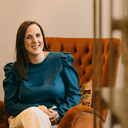
Lisa is the founder and CEO of L.T. Business Strategy & Management, where she helps coaches, consultants and small business owners scale their businesses without burning out.
After 10 years of trying to grow the hard way, Lisa cracked the code and built her second business to six figures in under four years, using the same three ingredients she'll share in this session.
She's now an eight-time award winner and finalist, and her team has saved clients over 6,300 hours of time spent on admin and operations.
Based in Derbyshire, Lisa is on a mission to help business owners stop spinning plates and start building businesses that work for them, not the other way round.
Watch more expert webinars
Access a growing collection of expert-led webinars covering marketing, sales, finance, growth and more – ready whenever you are.
Transcript
Lightly edited for clarity.
Beth: Hello, everyone, and welcome to today's Lunch and Learn. My name is Beth, and I'll be your host today.
For those of you attending a Lunch and Learn for the first time, Enterprise Nation is a vibrant community platform for start-ups and small businesses.
I'm very pleased to introduce Lisa Tennant, who is the founder and CEO of LT Business Strategy and Management.
In this session, Lisa will explain the three pillars she used to transform her own business and how you can apply them to yours, whatever stage you're at.
If you have any questions throughout the webinar, please post them in the chat and we'll do our best to answer them at the end of the session.
Today's webinar will be recorded, and we'll send a follow-up email with the recording and further resources later today. Over to you, Lisa.
Lisa: Thank you very much to those of you who have joined. I'm going to share a little bit about my story today and the three secret ingredients I used to scale my own business.
I'm Lisa Tennant. I've been in business for 22 years now, which is half my life. I'm the owner of an award-winning business management company, LT Business Management, and I support businesses with strategy, management and systems implementation.
I also own a SaaS company, More Than a CRM, and I build bespoke systems for service-based businesses using AI and AI agents. I can also help implement admin, tech and marketing support for business owners.
Before I start, I want to explain the difference between scaling and growth. These terms are often used together, but they're not the same.
Growing your business means adding more revenue by adding more resources: more hours, more team and more cost. Scaling means adding more revenue without adding much cost at all.
It's the difference between working harder to earn more and building something that earns more on its own. Growth keeps you running on the treadmill, but scaling lets you step off it.
I want to share my story because I think it's important for you to understand how I arrived at these three secret ingredients, which won't be secret for much longer.
In 2004, I started a side hustle. Like a lot of people, I was working full time. It wasn't very well paid, and I'd recently split up with someone, so I was now the only income provider in a home that needed paying for.
I decided to start a little side hustle, and at the time, it was just ironing. I ironed for people who needed to outsource it, usually people who were busy and working full-time jobs.
Over the next four years, I grew that into something that allowed me to leave my full-time job and turn it into a proper business.
Quite by accident, a company in the wedding industry contacted me and asked if I would do all the laundry and ironing for their chair covers, tablecloths and linens for hotels where they were hosting weddings.
I said yes, because I'm very much one of those people who says yes and figures out how to do it later. At the time, I was literally working in my kitchen.
It was just me in my house with one washing machine, one tumble dryer and one ironing board. I was faking it until I made it, to be honest.
At the time, I was doing everything in the car, but I was then able to buy my very first combi van.
I started doing that work, so I wasn't just working on the domestic side anymore. I was now working on the commercial side.
That quickly grew, and more and more wedding suppliers got to know about me. I carved out a niche and became the go-to provider in the West Midlands for that service.
Suddenly, I was providing all the laundry and ironing for chair covers, the proper cotton ones, if you've ever been to a wedding or event, which had to be hung up before delivery, along with all the tablecloths and napkins. I was doing all of that myself.
Sometimes I would outsource to a dry cleaner, but pretty much I was doing it all on my own.
In 2008, I met my now husband. We've just celebrated 18 years together. I look back and think I have no idea how I made that work because I literally worked 24/7, and I'm not exaggerating.
I was working from five in the morning until midnight or one in the morning. Sometimes I would be so exhausted that I'd climb into bed fully dressed, unable to even think about putting my pyjamas on. I could be standing there working and just start crying because I was so tired.
All the while, I was thinking: this is what it takes. That's what you're told. You have to put the graft in. You have to work really hard, and that's what success looks like. That's how you get there.
You hear it from people like Steven Bartlett and Daniel Priestley, and I'm sure they're well-meaning. But you're told to put it all on a credit card, or take big risks, and that's how you get to where you want to be.
That was pretty much what I was doing. I wouldn't take any holidays longer than a week because I was scared my clients might leave me.
I was still answering all the emails when I was on holiday. I was the admin person, the marketing person, the sales person, the invoicing person, the driver and the person doing the actual work.
Over time, I moved in with my husband. I did manage to invest in some industrial equipment, and I had a workshop built. So I wasn't completely lying when I wasn't telling people that I didn't have a big unit and was still working from home.
It's funny because it's different now. People love the idea that you're building something from your bedroom. But back then, it was different. You had to appear more corporate than you really were.
Then we decided we wanted to start a family. Unfortunately, I can't have children naturally, so we went through IVF. I was lucky enough to fall pregnant first time, and this was in 2012.
Even going through that journey and the pregnancy, I was still doing everything myself. Occasionally, I would get family members in to help because it felt comfortable and more natural to ask them, but I definitely wasn't employing anyone.
By then, I had quite a big van. We'd customised a large Volkswagen LT van with hanging rails for all of the chair covers.
Then, around the seventh month of pregnancy, I found out that my son was going to be very poorly when he was born and would be fighting for his life. All of a sudden, I couldn't do everything on my own anymore.
I knew I would be spending a lot of time in hospital when he was born, and I was also at risk. Everything had to change.
I look back now and think, I don't know what I thought I was going to do anyway. Did I really think I could carry on doing what I was doing right through to delivery day? I have no idea what I was thinking.
Realistically, it was a lack of strategy. But I was still convinced I was going to scale my business.
I took on my very first employee. I started interviewing and took on a van driver, a guy called Terry. He was absolutely amazing. I outsourced to 10 subcontractors. I already had the dry cleaners, and then I got a launderer involved as well.
Suddenly, I had to systemise my business. Everything had been run on what I knew in my head. I had never had to process it before or put it into any documentation, and all of that had to change very quickly.
I had to create delivery routes for the driver, timings for the clients and make sure everything matched up in terms of what the driver collected, who we delivered to and when.
Suddenly, all of these systems and processes that had been living inside my brain had to come out just in time for the arrival of my son.
I'm really glad I did that because he is alive and well, and he's now a very annoying 14-year-old young man. But he did spend three months of his life fighting in neonatal intensive care, and there were some really difficult moments.
We often don't think about that as business owners. We don't think about what happens if we become ill or critically injured, or someone else in our family does, and we have to step away.
Then something amazing happened over the next couple of years. I started to scale my business.
I hadn't realised until that point that the business was never going to scale as it had been. It didn't matter how many times I went to bed fully dressed, completely exhausted, having breakdowns and only going on holiday once a year. None of that was ever going to help me scale the business.
Unfortunately, I fell out of love with the business at that point. It had been a lot of hard work for a really long time. So in 2014, I sold it.
That was like seven years of value. I try not to think about it like that now. I think about it as a learning curve, and it taught me what I know now.
What I learned in those 10 years, and what I hadn't managed to achieve in the first seven years, was that I had been the bottleneck in that business. By trying to do absolutely everything, I had stood in the way of its ability to scale.
It made me realise that just because I could do everything didn't mean I should. Capacity was always going to be limited because I was the only one able to deliver.
My lack of systems and processes stopped me hiring sooner. I was so busy in the day to day, and because I hadn't put any systems in place, the idea of taking someone on felt overwhelming. I would have had to train them, and all the information was living inside my head.
It also meant that even though I kept telling myself I wanted to scale my business, I didn't actually have a strategy to do that. I didn't have any long-term plans.
Ultimately, fear stood in the way, and that's what stands in the way for a lot of business owners. Fear of not having enough money coming in to pay people. Fear of taking someone on and them not being able to do it as well as you. Fear of training people. All of those things are valid.
But it meant that I was never going to scale my business. I just didn't realise it at the time.
So this is what I learned. The three ingredients I should have had were strategy, systems, including processes, and people.
Without a working strategy, you can't plan ahead. You can't project the tools or people you will need. Too many people focus on sales goals without having a strategy for how to achieve them.
Systems, including a CRM, AI agents and software that is necessary to your business, enable you to automate and develop your processes so that training becomes easier.
Then, once you have that in place, you can bring in your people.
How many solo millionaires do you know? At the moment, I would say it is impossible to scale a business without help. With AI, it may happen. We may end up with our first multimillionaire who has done it all alone. But at the moment, you still need people.
Whether that's someone helping with your admin or an accountant doing your books, you still need people. You cannot do it all alone.
Over the next eight years after I sold the business, from 2015 to 2021, I managed a charity. I was responsible for the staff, compliance, stakeholder happiness, composing reports for the board and reporting to the Charity Commission.
I made a profit year on year, which was reinvested back into the charity, making it an integral feature locally. It became known as the beating heart of the community, which is something I'm still proud of today.
I also headed a fundraising committee and raised over £65,000 during my time there. It taught me a lot about running a business, managing a team and putting the right systems and processes in place.
Then COVID happened. For me, COVID gave me time and an opportunity to think about what I really wanted to do with my life, as I think it did for a lot of people.
I realised I wanted to travel. That's what I really wanted to do. I wanted to travel the world. To do that, I needed a job I could do anywhere.
During the September lockdown, I couldn't sleep one night. It was three in the morning, and I was sitting at my computer googling: "What job can I do anywhere in the world?" I came across the world of virtual assistants. If you don't know what they are, they are basically remote personal assistants.
I thought, I could totally do that. So I started freelancing as a virtual assistant alongside my job and realised straight away that this was something I was going to build on. I decided I wanted to start my own VA agency.
After the first year, that's exactly what I did. I quit my job, and in 2021, I registered my own limited company, LTVA Services.
I invested in a CRM to begin with and outsourced to an accountant. I took the knowledge of those three ingredients into this business from day one. I knew exactly what not to do.
The first thing I did was invest in a CRM system because I knew I would need to automate as many of the manual processes as possible and develop processes based on my systems, so I could hire and train people.
An accountant might not seem like a big deal because lots of people have one, but I didn't do that for 10 years in my first business. I remember panicking every 30 January, thinking I was never going to get my accounts in on time. So that was the first thing I outsourced.
By 2022, I'd taken on two more associates, and by the end of the year, my own assistant.
In October of that year, I set off on a five-month tour of Southeast Asia. I took my children. We homeschooled them for three years after COVID, and we had the most amazing time travelling on and off. I could not have done that five-month stint without starting this business.
Bearing in mind this was a brand-new business, I was able to do that because I had implemented a small team straight away.
By 2023 to 2024, I grew the team and started a SaaS company supplying CRM systems to businesses, called More Than a CRM.
In 2025, I scaled to a six-figure turnover in under four years. This year, we pivoted into what we are now, LT Business Management, providing management strategy and systems implementation.
None of that would have been possible without those three key ingredients. None of it would have been possible without the mistakes I made in the past and the lessons I learned from them.
So the three ingredients are strategy, systems and processes, and people.
Once you've created a system, you can document how it works in your SOPs, your standard operating procedures, and then bring in people.
Without those three things, I truly do not believe a business can scale profitably.
· Strategy gives you direction. Without it, you're just busy.
· Systems give you structure. Without them, everything still relies on you.
· People give you capacity. Without them, you are the ceiling.
We provide all three of those things at LT Business Management. We provide strategy blueprints for businesses, whether that's for your whole business, marketing or launching. We provide systems implementation through CRM, bespoke AI systems and AI agents. And we provide people, so we still provide virtual assistants, specialising in admin, marketing and tech.
I love being able to bring all those years of hardship into what I do now, and knowing that I can give that to other businesses so they can achieve their dreams of scaling without making the same mistakes I did.
Thank you very much for listening. I hope I've left enough room for questions, and I hope this inspires you if you're feeling stuck or afraid of letting go. If you truly want to scale your business, it is the only way.
Beth: Thanks very much for that, Lisa. I really enjoyed your story.
It's funny what you say about starting your ironing business, working from home and how that wasn't seen as a good thing at the time. Now that narrative has completely switched, hasn't it?
Katie said in the chat: "Anyone who runs an ironing business gets my total respect."
Lisa: I don't iron at all now if I can help it.
Beth: You've done your time.
Lisa: I've done that, yes.
Beth: Simon says he loves ironing. He also asks: are there any books to learn about scaling that you'd recommend?
Lisa: There are so many books out there on scaling. You could type that into Amazon and find a lot.
None come to mind immediately that I've read and would recommend off the top of my head. But for me, ultimately, those three things, even if you do them one at a time, are the ingredients you need to scale.
I don't think it's possible if you do only one or two of them. You really do need all three.
Beth: We've got a question from Ithiel in the chat. They would like to know: how do you deal with commercially private information?
Lisa: Do you mean GDPR and data privacy, that kind of thing?
Beth: We'll wait for Ithiel to clarify that in the chat and come back to it.
Kelly asks: what KPIs do you think are the most important for scaling?
Lisa: That's a good question. It depends on your benchmarks to begin with.
What are your measurables at the start of that journey? If you want to increase productivity or income, you need to set out where you're starting from and then review that later down the line.
For me, it's about profit. I want to achieve more profit, and if I'm not achieving more profit, I want to know why. But I know I'm not going to achieve more profit by trying to do it all by myself. That would be impossible.
So profit is definitely one of the key ones. Obviously, revenue matters too, in terms of what you're turning over. But also things like customer satisfaction. It depends on your business.
I'm a service-based business, so I want to deliver really good customer service. If I was trying to deliver it all on my own, that would be impossible. I would ultimately let someone down. Those are the kinds of measures I'd be thinking about as well.
Beth: We've just had a reply from Ithiel. The question was around commercially private information and how you deal with it. For clarification, they mean inventions, formulations and methods of manufacture.
Lisa: That sounds specific to that type of business or manufacturing, so I'm not sure I can answer it fully.
If you mean giving that information to someone else you're training, then obviously there would be terms and conditions and NDAs that you can sign.
If it's processing information, you would need the right things in place, such as ICO registration, data protection measures, service level agreements and those kinds of things.
But I'm still not completely clear what you mean specifically, so it depends on whether you're talking about sharing information with someone else or protecting it more generally.
Beth: Ithiel, feel free to add more clarification in the chat, and we'll hopefully revisit it by the end of the session.
Caroline asks: "What I need to develop in my business is an in-person virtual assistant working on a freelance basis with me in a central location coworking space. Does this type of service exist?"
Lisa: It does exist. Lots of VA companies and VA agencies provide in-house virtual assistants.
What you're looking for is someone to physically come out to you. I'd say look for a solo VA or VA agency local to where you are, and ask if they would be open to meeting in person.
Virtual assistants usually go into this work because they can be remote. But I know that a lot of VAs will meet clients in person. Pick somebody local to you if you can, because you're more likely to make that happen.
Beth: How can a business owner determine whether their growth challenge is a systems issue, a people issue or a market issue?
Lisa: If you're struggling with that, that's where you need someone else to step in and look for you.
That's where we do more of a strategic overview. We can look at it from a deep-dive perspective and see what's going on inside your business.
It's harder to do that when it's just you looking in. Sometimes you need that zoomed-out approach. But it relies on data. You need to look at the data to figure out why you're not growing.
It could be any one of those things, or a mix of all three. But without looking at the data, it's hard to know where it's coming from.
Beth: In your opinion, what tasks were the hardest for you to delegate, and how did you overcome that?
Lisa: The hardest tasks are always the ones where, for me with the ironing business, it was doing the actual work because I thought: "No one can iron as well as I can."
It's the doing. Even now, in this business, I'm still mainly the person who deals with the strategy element because of the way my brain works. I would always want someone to be as good as me, if not better, to deliver that.
But it's important to remember that people don't have to do it your way, and they don't necessarily have to be as good as you. As long as they can do the job and do it their way, you need to be able to give people that autonomy.
Clients only know who they're talking to. If they only ever speak to me, they only know what I deliver. If they speak to someone else on the team, they know what that person delivers.
Whatever your core service is, letting go of that is the hardest thing. You can let go of the admin. You can let go of the marketing. You can let go of the finances. But the deliverable of the actual work is the hardest thing to let go of.
Beth: How do you prioritise improvements when there are dozens of inefficiencies across the business?
Lisa: Don't try to look at them all. Start from the beginning and look at one at a time.
I have a team now, luckily. I have a relationship manager who looks after the clients and the team members. We have regular meetings every week and look at what's happening.
I've built systems, because I build AI systems that can study the data for me. It looks at things like whether a client is using enough time. Our clients buy time packages, so are they using enough time? If not, why not? What are we doing about it? Is there a high churn risk?
We use data to look at those things, then work out why it is happening and try to identify patterns. Then we can tackle them.
Sometimes it's a process of elimination. Other times, you get it right more quickly. But it's continuous improvement. You can't rest on your laurels and say, "I've sorted that now." You have to keep looking at it, checking it and asking whether it's still working.
Beth: If someone left today's session and could take only one action this week, what would you recommend?
Lisa: Systemise your business. There's no point in taking people on if you haven't got a system.
Strategy is obviously really important. But if you haven't got a CRM and you're trying to do everything on spreadsheets, that's no way to scale your business.
You need a proper system, especially one that allows you to automate, because that is ultimately going to allow you to step away. It also means someone else can step in more easily in your absence and learn from those systems.
That's what I would say. But if you don't have a strategy, you need to start there, to be honest.
Often I run through a strategy session with someone and realise they don't have any systems in place. Then we tell them they need X, Y and Z.
So if you have a strategy already, start with your systems. If you don't even have a strategy, start there.
Beth: Do you have any more plans to travel, or was that your three years?
Lisa: I always want to travel. Unfortunately, my children decided they wanted to come back and go to school, which grounded us. They're 14 and 15 now.
We still travel as much as we can. We're off to the Netherlands soon and doing a tour of Luxembourg and Germany. We'll still do as much as we can, but in a few years they'll be old enough, and I'll be able to do it all again with my husband, and it'll be cheaper.
Beth: Exactly. One of the many benefits of running your own business.
Thank you so much. I think that's all we've got time for today. If you have any questions for Lisa and want to connect with her afterwards, please reach out to her. I've left her LinkedIn and Enterprise Nation adviser profile in the chat, so please do say hello.
Lisa: I do have a free interactive strategy planner that you can get from me. If anyone wants to email and ask for that, it's lisat@ltvaservices.com. I haven't changed the email yet since we changed the business name. You can also reach out to me on Enterprise Nation, and I'll send you the link.
Beth: Perfect. I'm sure a lot of people will take you up on that. Lots of thank yous in the chat. Thank you so much for your time, Lisa.
Lisa: Thank you.
Beth: Thanks everyone else for joining us. As I said, we'll share the recording and further resources later today. Enjoy the rest of your day.
Lisa: Thank you. Bye.
Explore our webinar library
Unlock more on-demand sessions designed to help you sharpen your skills, grow your business and stay one step ahead. Find more Lunch and Learn webinars
Hey, I am an Operational Strategy Consultant and founder of L.T. Business Management, supporting service-based businesses to remove operational bottlenecks and scale sustainably. I specialise in systems implementation, CRM optimisation, and helping founders move beyond founder-dependency. Having scaled my agency to six figures, I brings practical, real-world insight into building infrastructure that supports growth rather than chaos.
As well as service-based business looking for systems and strategy, I support medium organisations by finding the money and time leaks through operational and systems leaks within their teams.
I often run in-person workshops teaching small business owners CRM automation, course and funnel building and regularly speak on topics such as AI, automation, systems, marketing and adversity. I'm based in Derbyshire in the Peak District and am mom to two boys. I'm also lucky enough to own a Co-Working Business. The Co-Working Spot is based in Ashbourne and despite my passion for travel we've settled here as a family along with my husband and little dog Miles.