Three cost-effective growth strategies that actually work
Posted: Wed 18th Mar 2026
Think websites are expensive? Email's dead? AI's going to steal your job? Wrong, wrong and wrong.
If you're relying solely on social media, wondering why you're working flat out but not seeing growth, or convinced these "big business" strategies aren't for you, this Lunch and Learn led by Kathy Ennis will change your mind.
She cuts through the myths and show you exactly why three foundations – a website that works 24/7, email marketing that converts and AI tools that save you hours – aren't optional extras. They're your ticket to consistent sales and sustainable growth.
Walk away with practical tools, real-world examples and a clear plan for what you need (and what you don't) to build a business that actually makes money.
Topics covered in this session
Why a website isn't an expense – it's your 24/7 sales team (and how to build one that actually converts without spending thousands)
How email marketing delivers £36 for every £1 spent – and the simple automations that turn subscribers into customers while you sleep
Which AI tools save you hours every week on content creation, admin and customer engagement
About the speaker
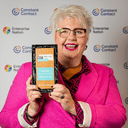
Kathy is the founder of LittlePiggy and an award-winning business mentor who specialises in working with solopreneurs, freelancers and side-hustlers.
After 20 years in the corporate world, Kathy launched her own business at 40, knowing nothing about how to do it. It didn't all go to plan, but she learned, adapted and built something sustainable.
Now, with more than 25 years of running her own businesses, she uses her 5Ps framework (People, Products, Price, Promotion and Productivity) to teach her clients how to move from passion to profit with practical, no-fluff guidance.

Watch more expert webinars
Access a growing collection of expert-led webinars covering marketing, sales, finance, growth and more – ready whenever you are.
Transcript
Lightly edited for clarity.
Mark: Good afternoon, everyone. We'll just let people in from the waiting room for another 10 seconds or so, and then we'll get started with today's Lunch and Learn.
Hello, everyone, and welcome to today's Lunch and Learn. My name is Mark, and I'll be your host today.
For those of you attending a Lunch and Learn for the very first time, Enterprise Nation is a vibrant community platform for start-ups and small businesses.
I'm really pleased to introduce Kathy Ennis, founder of Little Piggy. In this session, Kathy will discuss practical tools and a clear plan for what you need – and what you don't – to build a business that actually makes money.
If you have any questions throughout today's webinar, please post them in the chat, and we'll do our very best to answer them at the end of the session.
As always, today's webinar will be recorded, and we will send a follow-up email with the recording and any further resources later today.
So, without further ado, over to you, Kathy.
Kathy Ennis: Thank you so much, Mark. That's really kind of you, and thanks for the introduction. Thank you to all of you who have taken some time out of your day to come along to this session.
Three cost-effective growth strategies that actually work. I could have given you 25, but we've only got half an hour, so I had to restrict the number.
I've chosen three things that I find often come up when I start talking to prospective clients and clients I'm working with. These are three areas where there can sometimes be a problem, but they sit right at the heart of making your business as effective as possible and helping it start and grow successfully.
So, just a little bit about me.
I'm a business mentor. Mark and I were just having a lovely chat about the fact that I live in Norfolk and he comes from Norfolk, so that was very nice.
I've been in business for about 26 years now. I work primarily with single-person businesses, so solopreneurs, freelancers and side hustlers.
But I work across business generally in terms of size, scale and stage, whether businesses are starting or growing.
A couple of years ago, I was fortunate enough to be awarded the Enterprise Nation Adviser Award in the category of business strategy, which I'm incredibly proud of.
It gave me a little pat on the back to say that maybe what I've been doing over the years has actually made some impact, and I'm really proud of that.
If you want to find out more about me, what I do and how I help, my website is littlepiggy.ltd, and you're more than welcome to go over there, have a good mooch around and get in contact.
If you want to have a chat about anything, there are plenty of buttons there you can press to book a conversation straight into my calendar.
So, without further ado, I'm going to move on to strategy number one, which is websites.
I will say that, in this day and age, I sometimes find there is resistance towards websites in favour of some of the social platforms. I think there is sometimes a lack of understanding about the importance of a website because we are sold this idea that all you need is maybe a great Facebook page or an Instagram profile and, hey ho, we're all sorted.
I want to let you know why I don't think that is necessarily true. Why, in my belief, every business needs a website – and ideally a great website.
The first and most important thing is ownership and control.
If you have a website, it is yours. It is your space. It is your shop on the internet high street. It is the place where you can be you, where you can showcase everything that you can do and everything that you can offer.
It is basically your storefront on the internet and out into the world, which cannot be said in the same way for social media.
In a social post, you can highlight maybe one thing, or talk about this product or that service, but you can't necessarily showcase you as a whole and the impact and difference you make through the products or services you're selling.
I want you to think about your website as being your home base, and the other things that you use as being the routes by which people find your home base.
The whole point of a social post should be to bring people to a website where you can show them more about who you are and what you do, and hopefully lead that on to a sale.
Trust and credibility are massively important in this day and age, where there's so much fraud going on. A website can make people trust you more and can help build your credibility.
I was looking at some stats the other day, and eighty-one percent of people do more research than we maybe think before making a purchase decision, and they are looking for a business website, not just social profiles.
They feel that a website brings credibility and trust. I think, for your potential customers, it does lead to more confidence in terms of them wanting to buy from you.
If your website is linked to something like your Google Business Profile, that gives you an extra layer of credibility.
You're open for business 24/7 with a website. It's not that you have to be online at a certain time or be there to answer direct messages coming through socials or email.
Your business is there all of the time. So regardless of which hemisphere you're in, you can be serving people in different parts of the world.
The biggest thing I want you to consider is the fact that your website should be the central hub for your marketing.
I've mentioned this before: if you put your website at the heart of what you're doing and use all the other tools as routes to get people there, you're much more likely to be able to showcase who you are and the breadth of what you do.
Someone may come to you thinking they want one thing, but they could end up going away with something completely different.
So think of your website as being at the heart of your marketing strategy.
There are some common myths that websites are expensive, but they do not have to be.
I was speaking to somebody the other day who started a business recently and set up a very simple website on something called Carrd, spelled C-A-R-R-D.
You can do it for free. It's a single scroll page, which is enough if you're getting started.
I know someone else who has paid the princely sum of twenty pounds for the year to have one that you can do slightly snazzier things with. That's actually a really great place to start.
If you think about tools like Wix, for example, they're not particularly expensive when you're getting started.
If you're putting your website at the hub of your business, it is worth investing in going forward, but you don't have to have an expensive one from the beginning.
You may not know how to build one. I will say that if you do it yourself or get your nephew to do it, it will probably look like it.
I want you to think of a website as an investment in your business rather than a cost because of the credibility and the central role it plays.
It would be worthwhile investing in getting somebody to put one together for you if you can't do it yourself.
On the other side of that, I would also recommend that you learn some of the basics just for the general day-to-day management of the site.
You may be a little technophobic, but it is worth your while learning some of the basics in order to manage it properly.
And the answer to the question, "Isn't social media enough?" in my view is just a simple no.
It's not. You don't have ownership. You're at the mercy of their decisions.
Most of them don't have proper appeals processes. If something happens to your social profile, that's a real problem.
They're great, they do work, and they do add something, but they are not the full answer in my opinion.
A great website should be as clear as possible. Use plain terms. Don't use highfalutin words that people won't be searching for.
Tell people what you want them to do. Click here. Do this. Do that.
Tell them very specifically what you do.
"With my skincare, you will have fantastic skin." It's that kind of thing.
Make sure there are lots of things on every page that ask people to engage, like download this or sign up for this, but make it as clear as possible.
Your design should follow the function. Don't obsess over whether a picture should be in this place or that place.
You need to think about what you want people to do, and then think about the design on top of that.
It's much better to have something that looks really clear and almost plain, allowing people to move around easily, than it is to have lots of bells and whistles.
Remember that search engine optimisation works off all of the words on your website, so make sure you are using words that people are actually searching for on Google.
Make sure there are lead generation options on there. You can have downloadable resources, a pop-up, or encourage people to join your mailing list.
Social proof matters too. Make sure you've got testimonials and, if possible, case studies.
If you're a member of any organisations or have accreditations, all of those go on there.
And make sure you're using and visiting the analytics options as often as you can.
Google Analytics is not the easiest platform in the world to understand, but I can tell you there are plenty of people on YouTube who will explain it so that you can use it and find out what's actually happening.
I've pulled together some tools and resources. One thing I will say is that at the end I've got a QR code where you can get a copy of an enhanced version of these slides.
So rather than taking screenshots and all that kind of stuff, if you want those at the end, just click the QR code.
These are some tools and resources under websites that I would recommend you have a look at.
The second strategy is email.
The number of times people have said to me, "Email's dead. We don't need email anymore."
Most large-scale businesses would totally disagree with you.
Email is not outdated. It is not something you should stop looking at.
Email is one of the biggest tools for building relationships and trust because it's coming directly from you into somebody's inbox, and it is not reliant on them scrolling through Instagram at seven o'clock while The One Show is on to see whether somebody has posted something.
It's direct.
It does drive conversions. Well-crafted emails get people to do things.
Statistically, you'll find that email makes people take action far more than social posts.
You can automate it, so it becomes an automated element within your marketing.
You can use it to keep up to date with clients, to onboard clients, and to engage people.
It also generates really good insights for you. Who's opening what? What are they clicking on? How often are they opening? Those kinds of things are much deeper statistics than you would get from other places.
It's not spammy, and it's not outdated. It's only spam if you use it as spam.
If you're sending messages to people who have said they want to hear from you, there is no spam involved.
Is it too complicated? Maybe it can be when you get started, but all of the platforms have really good tutorials on them.
Understanding what you want to do with email is the first step, and then getting into the habit of sending something out regularly on a drip to a group of people who have said they're interested in what you do.
That can lead to more business.
And then when you start to get more familiar with it, including things like automations can really put that into overdrive.
We do have to be concerned about GDPR, but we have to be concerned about that across the whole of our business, not just in email marketing.
Basically, GDPR is best practice. You only send stuff to people who have said they want to receive it, and you always make sure they have the opportunity to unsubscribe.
So this is why you use an email marketing platform. It doesn't come out of Outlook or Hotmail or any of those places.
It comes out of platforms like Constant Contact, MailerLite and others.
I think the key thing for me is that you are in control of this. No third party is in control. This is yours.
With email marketing, use the right format for what you want to do.
All of us know the concept of the newsletter – a regular little drip that goes out weekly or maybe twice a month. I'd never recommend daily, folks. That's overkill.
You can use announcements: this is happening, we've now got this in stock, this is what we're doing.
You can use promotions, obviously. You can use email in your marketing in terms of direct promotions.
I always say to people, think about the three-to-one principle.
Three pieces of really useful information to one promotion.
If it's just "buy this, buy this, buy this", that's when you're going to get unsubscribes.
Then you can build automations in. You can create something that you want to send to people on a regular basis, create it once, and it just keeps going.
Your email has to go to an audience that's interested in it.
It has to contain information they find interesting, and it has to look great in any inbox – both on desktop and on mobile.
By using one of the platforms, you'll ensure that happens because they have well-designed templates.
You don't even need to think about the design because you can just use one of the pre-designed templates they've got.
For me, if I were to put things into a structure of what I would prioritise in my marketing, it would be website, email, and then social media.
I think that brings you far more into the world of your potential customers, and email into their inbox is going to be far more effective than just a random scroll across a social platform.
A few tools and resources: Constant Contact is the platform I use, but there are hundreds of them – ActiveCampaign, MailerLite, Mailchimp and so on.
For GDPR compliance, if you haven't checked out the Information Commissioner's Office, the ICO, I would definitely recommend that you do that. Very simple: ico.org.uk.
They are the arbiters of GDPR in the UK, so if you haven't checked them out, make sure that you do.
My third strategy is good old AI.
What would I do without AI?
I want to say that we talk about this a lot now as if it's something new, but AI has been in our lives for many, many years.
Any time you've done any kind of chat through a bot on a website, or even used frequently asked questions built into Facebook, those are based on an automated intelligence system using the kinds of questions people ask.
So AI isn't new. It's just new in a slightly different way.
In terms of growth strategy, I use AI massively for brainstorming.
I've got an idea – this is my silly idea – and I use real language. I don't use prompts. I just talk to the AI as if I'm talking to you.
Sometimes I use the microphone rather than typing.
It's great. It's like having a sounding board in my office.
It's great for content creation, but do not take the first iteration. Do not take what it gives you straight away. Make sure that you edit it first.
It's useful for marketing support. It can help you create schedules and content.
For customer engagement, admin and productivity, I would say it's great for standard letters, standard templates, and structuring your customer flow.
AI can help you with all of that.
If you think about niche tools, one that comes to mind for me is Descript, which is a great video editing platform.
You edit the video from the script rather than from the video stream itself, which makes editing much easier.
You can overdub because you can record your voice and add extra narration. It's a great tool. If you've not checked out Descript, go and have a look at it.
You don't have to have loads of IT skills, and you don't have to be technically minded.
You basically just have to know what outcome you want from what you're doing and, in most cases, talk to the tool.
Some people think everything will become homogeneous – that everything will be the same.
But if you approach AI properly – and as I said, I talk to mine as if it's a friend in my office – it starts to pick up your language patterns and understand who you are.
If you have the paid-for versions, you can actually train it. You can give it loads of information about you.
These are the words I use. I would never use this word. Stop giving me American spellings. Stop putting commas after the word "and" in sentences.
You can actually tell it what you want.
When you're having that conversation with it, much more of you comes through.
So it's a little bit about training it in terms of what you want.
I think data and security is another issue.
Everything has a privacy policy, just as your business should have as well.
You need to make sure you understand what their privacy policy is and what they can or do with the information that you create on there.
The key is to use a platform that you feel is most secure.
Obviously, most people talk about ChatGPT. I use ChatGPT, but my go-to one is Claude because I think it writes better.
It's about getting to understand the one you're using, but definitely learn what your data is doing.
I would say that not just for AI, but also for social media. If you haven't read the data security policy or privacy policy on any of your platforms, that's a weekend job for you.
I think experimentation is key. Have a go. Use the free versions. See what it's like.
Start with a small project.
"I want to write a newsletter, and I want it to be on this topic, and this is the angle I want to come from. Could you give me a couple of paragraphs for that?"
Then start thinking about integration, because it's not just about using AI for isolated tasks.
You can use AI to manage the process from invoicing through to your accounting processes.
You can use AI as a way of moving somebody from prospect through to paid customer in a CRM system.
I want you to think about AI generally.
It's not just things like ChatGPT, Claude and Copilot. AI is built into most of the systems that we use.
One of the things we can do is get them all to talk to each other so that we get a much smoother experience as business owners, and so do our customers.
I put this in here because I wanted to show you the kind of thing that might lead to.
We get a website enquiry. The form comes in. That person's details go into our CRM.
They go into our email marketing so we can communicate with them.
At the next stage, AI creates a proposal and an email template.
Then, when the person comes on board, the CRM is updated. They go into the invoicing software and through the payment processing.
As we work together, we've got project management and AI scheduling in terms of meetings or work patterns.
When we complete the project, AI handles things like final invoicing, contract completion and so on.
The final step might be that we put this client into the CRM in a slightly different segment, where we start thinking about whether Mary wants something more expensive now, or whether she might want to buy this next.
So this is the whole idea of upselling and downselling.
Again, a few tools and resources – and the kinds of things they can do.
Even basic accountancy software has AI systems built into it.
So there are lots and lots of things that you can be doing with this, rather than just using it to say, "Hey ChatGPT, I need three Instagram posts on X, Y or Z."
So, just to come to the conclusion: if you want a copy of these slides, slightly enhanced with extra bits and pieces, all you need to do is take a photo of that QR code.
A little box or page will pop up, and you can put your details in. That will open a page where you can download them.
Brilliant stuff, Kathy.
I know that was a massive run-through. I'm really sorry, folks.
But if any of you have questions for me afterwards, you can just drop me a line, so don't worry about that.
Mark: Excellent, Kathy. Thank you so much.
Just some questions immediately off the back of that: what do you think are the must-have elements of a website that actually help convert visitors into customers?
Kathy Ennis: A simple journey. Use simple words and a simple menu structure, with words that people know like Home, About, Products, Services, Blog and Contact.
Also, make sure you're using words that people are actually searching for.
One of the first things I always recommend people do is go onto Google and start typing in what you think people might be looking for, and see the options Google gives you as to what people are really searching for.
Or use something like Answer the Public, where you can see what people are really looking for, and use those words.
The About page is the second most visited page across the internet.
So don't just say, "We're a car dealership in so-and-so." Say, "Hi, I'm Fred, and I've been working in the car industry for the last 26 years, and I can tell you all of this about cars."
Use the About page to actually be about you, not just as some secondary page that sits there.
Mark: And that leads really nicely into my next question, in terms of that storytelling piece. What types of emails convert best right now in terms of educational, promotional or personal storytelling?
Kathy Ennis: The thing with email is to think about what your overall intention is. It's the same with any marketing you're doing. What's the overall intention?
For example, having a regular newsletter – I'd never call it a newsletter, but that's the concept – going out as a drip feed keeps you front of mind.
If something is coming into somebody's inbox every week that is, say, twenty sentences or fewer and is helpful in some way, that keeps you there.
If you then think about the statistics you're getting off the back of that – who's opening it, which links they're clicking – that allows you to segment people down into interests.
You can then build secondary emails that focus just on the things those people are interested in, where you might include a call to action in terms of a download, a purchase or a contact.
So it's about using email in a much more logical way.
The regular newsletter going out is great, but it may not sell very much on its own. It's the other bits and pieces you do with it that matter.
But if you're getting started, just begin with a regular drip feed because that will get you into the habit.
Mark: Great stuff. And a final quickfire question from us today: how do you grow an email list without relying heavily on paid ads?
Kathy Ennis: Never pay for anything, folks, if you don't have to – including email lists.
You never, ever pay for an email list because all of the email marketing platforms can spot a paid-for list a mile away.
One of the things you have to do is say that you have permission to send to those people. So how do you do that?
Basically, you tell everyone, and you put everywhere the fact that you've got something. You can have "Join my list" on your website. We all know that. It does work, maybe not hugely, but it does work.
Offer people something – a freebie download, the good old lead magnet. Have something that people are interested in.
"The five things every bride must know before she buys her wedding dress."
If you are a wedding dress seller, that is exactly the kind of thing brides are out there thinking about. What shape should I go for? What colour should I choose? Should I go frou-frou or sleek?
You're going to get loads of people saying, "I want a copy of that. I want to know the five things I need to know before I buy my wedding dress," because it's going to cost them a couple of thousand pounds.
That will get people onto your list. It also tells you what people are actually interested in. So lead magnets are great.
Sign-up forms matter too. If you're in product sales, things like pop-ups that offer 10 percent off your first order can work well.
But there are loads of things you can do. If you're a shop, have something at the till point. If you're a café, have something on the tables.
I think I've got something like sixty ideas for how you can start building your email list – and I will say, thank you Constant Contact, because I got it from you.
Mark: Brilliant. And thank you so much to you all for joining us at today's webinar.
Explore our webinar library
Unlock more on-demand sessions designed to help you sharpen your skills, grow your business and stay one step ahead. Find more Lunch and Learn webinars
Get business support right to your inbox
Subscribe to our newsletter to receive business tips, learn about new funding programmes, join upcoming events, take e-learning courses, and more.
Start your business journey today
Take the first step to successfully starting and growing your business.
Join for free