How to use panel discussions to raise your profile
To view this video, please accept marketing cookies.
Posted: Wed 27th May 2026
Have you considered how panel discussions could help you build visibility, credibility and connections?
For many people, they're a valuable opportunity, but it's not always clear how to approach them or make the most of them.
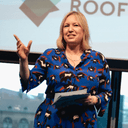
In this session, Andrea Carpenter shares practical insight into how panel opportunities work, how to position yourself for them and how to make the most of every appearance so you're remembered, invited back and recognised as someone people want to hear from.
Topics covered in this session
How to use panel appearances as a strategic visibility tool to build credibility, connections and opportunities
How to prepare clear, impactful messages so they stand out and are remembered
How to get invited onto panels and speaking opportunities, even without a large profile
About the speaker
Andrea is a communications consultant, writer and panel moderator who helps founders and professionals build visibility through panel discussions and speaking opportunities.
She's the founder of Diversity Talks Real Estate, an organisation focused on increasing the visibility of underrepresented voices through events, panels and media.
With a background spanning journalism, industry leadership and consultancy, Andrea brings both strategic insight and practical experience to how people show up and stand out in public forums.
She's the author of .
Panel Perfect: A Woman's Guide to Becoming an Expert Panellist
Watch more expert webinars
Access a growing collection of expert-led webinars covering marketing, sales, finance, growth and more – ready whenever you are.
Transcript
Lightly edited for clarity.
Ryan: Good afternoon, everyone, and welcome to today's Lunch and Learn. My name is Ryan, and I'll be your host today. For those of you attending Lunch and Learn for the first time, Enterprise Nation is a vibrant community platform for start-ups and small businesses. Today, I'm really pleased to introduce Andrea Carpenter, who's a communication specialist.
In this session, Andrea will share practical insight into how panel opportunities work. As always, if you have questions about the webinar, post them in the chat, and we'll do our best to answer them at the end. The webinar is recorded, and the recording will be sent out later today via email, so do keep an eye out for that. Over to you, Andrea.
Andrea: Thank you so much, and good afternoon, everyone. I'm really pleased to be here to talk to you about how to make the most of panel discussions. I think they're a great opportunity for founders and small business owners. People often see them as something that's not for them – maybe as something for bigger names or people with more expertise – but they're really accessible entry points to raising your visibility, which I think is a key component of your communication strategy as a founder or small business owner.
My name's Andrea Carpenter. I have spent most of my career in the built environment, so in the commercial property industry. Much of that has been around communications and marketing, and for the last 10 years or so, I've really tried to increase the diversity within real estate. It's a very white male industry, but we've got some amazing females in it, and we encourage them to raise their visibility by speaking at events.
The stage is a very powerful place to showcase your expertise, increase your personal development, challenge stereotypes, and provide role models. So I'm quite passionate about panel discussions being an amazing way to do this. I'm going to walk through some ideas about what I think a good panel is, how you should pick your panels, how you should craft your messages, and a few tips on how to get started and where to find panel opportunities. Do pop questions in the chat, and Ryan will help me with those after my presentation.
I think panels are a great entry point and a great opportunity for visibility. I know people look on stage and see a discussion happening and think it looks unstructured, something you might not be able to prepare for. But there's actually a lot more that goes into panel discussions than you think. There's often a preparation call, it's a shared spotlight, and it's good exposure for limited preparation.
There aren't many keynote opportunities in any particular industry – they're few and far between. So if you can establish yourself as a regular panellist, it's a great way of raising your visibility and showcasing what you do. I think you need to attend a prep call and do about 30 minutes of preparation to get ready, and it's a really useful moment in itself, which I'll talk about later.
Think about it from an event organiser's point of view. If you have a day's programme, there are usually two or three different panels, and if there are three panels, they're probably looking for nine to 12 people to sit on those panels. For event organisers to find fresh voices and different perspectives all the time is quite difficult. So if you can be proactive about putting yourself forward, that's really going to help you and help them. They want to hear from younger professionals, entrepreneurs, and people doing different things – all those perspectives are valid.
So I'm going to talk through three different things. I think panels are a kind of theatre, and you should choose your best opportunities – not all panels are equal. I also want to help you create messages with impact, so we'll spend a section on content. And at the end, I want to talk about how you find these opportunities, because you shouldn't wait to be asked – it's something you can be proactive about.
Let's think about panels as theatre and choosing the best opportunities. As I said, not all panels are equal, and you may have seen variations of these types of panels at different events. For me, a great panel is one where everyone's leaning in, everyone's listening, there's positive body language, and there's a good number of panellists that allows for a real conversation on stage. Then there's the opposite – a panel where eight people are on stage, person number five has no shoes on, another person is on their phone, and the guy with the curly hair is staring into the mid-distance. That is not a functioning panel.
What you want from a panel is conversation and debate. I liken it to a dinner party – if you go with four people, you can quite naturally sit around the table and have a single conversation where everyone joins in. Once you take that to eight people, it soon splinters into two groups. Event organisers sometimes believe they can put eight people on stage and have a natural conversation, when actually it wouldn't happen off stage either.
Which is why you end up with the guy with the curly hair staring into the mid-distance – he's feeling unloved, it's been ages since he was asked a question, and he's wondering why he's there. And just on that final picture – there's only one microphone in the centre. How can you have a conversation if you have to pass a microphone between people? It's stilted and awkward.
I've put together a kind of matrix looking at the number of panellists on one side and the types of moderating I see going on stage along the top. There's something I call "remarks and discussion," where the moderator asks each panellist to take a few minutes to talk about themselves and what's happening in their part of the market. Essentially, you're suddenly faced with a series of small presentations rather than a discussion. That's not really a panel, but it's quite a common format.
The first person doesn't take five minutes – they take eight. The second person, with an innate sense of fairness, also takes eight minutes. The next thing you know, you've wiped out a huge chunk of the time that was meant to be interactive and conversational.
The second type of style is the single question approach, where the moderator – often out of nerves or lack of experience – asks the same question to every panellist. Panellist A, what do you think of the market? Thank you. Panellist B, what do you think of the market? Thank you. It's boring, and there's no actual interaction – it doesn't promote the conversational quality we're after.
What I consider the best style is what I call the new style. It's where people are sitting around having a conversation, the moderator jumps in as necessary, but allows the conversation to flow. They're there to prompt the next question or topic or bring in the next person, but it feels like a natural conversation. Go back to the dinner party host analogy – if you're the host with three or four people in front of you, you want to make sure everyone is included and comes into the conversation, and that's what we should see on stage.
So, wrapping up on numbers: you can maybe get away with remarks and discussions for three people, since it's short, and the single-question approach works when you can go around people fairly quickly. But there's a sweet spot for the new style, which is three or four panellists. Five is a maybe – I've moderated a lot of panels with five people, and it always starts to break that natural conversational dynamic. You always feel like someone is being left out.
The reason I tell you this is so you can choose the right panels to showcase your expertise. That said, if you want to go to an event because they've given you a free ticket and the panel has five people, don't turn it down – but it may not be the best way to showcase your expertise. We don't think about the theory of panels enough, and there are actually some rules around which ones work and which ones don't. So do pick wisely.
Once you get to the panel, you want to create messages with impact. There is a magic number of three – that's what people take away. Don't say, "That's an interesting question, I have 17 points to tell you." I'm going to give you a formula for shaping your answers shortly.
People can only hold so much information at once – it's like a glass of water filling up. At some point, it spills over, and they can't take any more in. Once you stop and another person starts speaking, that glass is empty again, and people can refill.
You've also got to think about speaking time. If you talk to someone for more than about 50 seconds without letting them respond, there's almost a natural human behavioural instinct that kicks in – people start thinking, why are you still talking? Isn't it my turn now? The audience notices this on stage too, and they'll feel it's unfair. So 50 seconds is a good length to craft an answer around, and you can actually say a lot in 50 seconds.
I think people also get on stage and feel a bit stilted because they're anxious or nervous. But people actually want to see who you are. A colleague who's a trainer once said to me: don't be your job title, be the person you are. People want to see character and personality.
That touches on emotion too – in a business setting, we're sometimes afraid to bring in real-life case studies. I work in commercial real estate, which is usually a business of buying buildings and investments, but these days we're doing much more around affordable housing and trying to make our cities better. These are human things, and we should be able to have human reactions to them. Don't be afraid to put yourself out there as a personality on stage – you'll be much more engaging, and people will remember you.
Let's look at this triangle. There are different ways you can talk about something – you can talk about the details of it, what it does for you, and what it means. Take a phone: it's a collection of glass and metal. What it does is allow you to make calls, send messages, and look up where you are. But what does it mean? It means you're never disconnected, you're always able to reach the people you need to, and you're never lost as long as you have a signal.
The difference between describing the physical materials and describing the meaning is enormous. But a lot of people don't talk about meaning enough – they explain why they set up their business but don't say what it means to them, what it means for their customers, or how it changes the market. That's a really powerful aspect of engaging communication. So think about meaning.
Then we take that to this formula. If you take anything away from this Lunch and Learn, it's this. A colleague once described how, if you give someone a blank piece of paper, you can predict the four questions they'll ask about it. People expect information in a certain order: what is it? Why should I care? Tell me what I need to know. And finally, what does it mean for me?
If you can craft an answer for a panel in this way – starting with your overarching point of view, backing it up with an example or a statistic or a success story, and then telling them what it means – that's where the richness is. Let me give you an example. The question is a real estate one, but it applies more broadly.
Think about how we went through the pandemic as office investors asking: what is the future of the office? Well, I think the great experiment wasn't working from home – the great experiment was whether we were going to go back to the office. I also see diversity as a concern, because certain socioeconomic groups and genders find it more convenient to be at home, and they might miss out on opportunities as a result. There's also the loss of connection – you don't see people as often, and all those serendipitous things that happen in person don't happen anymore.
And finally, I think the next generation deserves us going into the office to pass on the tacit knowledge we've built up. So what this means overall is that the way we work has really evolved, and our offices as a physical space now need to evolve to support that. That's me framing a question and answer using that framework – and I think the final part, what it means, is the most meaningful thing.
I can also remember the answer, which is the point. My brain loves information structured this way, and I can use it in different ways. If someone asked me what my concern is about diversity, I could draw on exactly the same material. So, really have a go at using this framework.
So that wraps up the idea of having a relaxed, conversational message while still delivering real information. If you heard me give that answer, it didn't sound rehearsed – it sounded thought through. I always say: I don't want to watch a panel that hasn't prepared, just as I don't want to watch a play where the actors haven't rehearsed.
In a 45-minute panel with four of you plus the moderator, you're probably only going to speak five or six times, which is actually why it's so easy to prep for. Make those contributions count. Everything should be a strong message, easily understood by the audience.
A few things people ask me about: people say they don't know how to get out of the starting blocks when someone asks them a question – they go a bit deer in the headlights. It's okay to be thinking on stage. You can say "that's an interesting question" – just a few seconds for your brain to catch up is all you need to get going. "I think that's an interesting point of view", or "I agree/disagree" – give yourself those moments, as they're easy tools to help you perform on stage.
Moderators will often ask big, broad questions like "how is the market?" and you're thinking, where do I even start? Narrow it down. Say, "As a founder, I'm finding fundraising pretty tough at the moment" or "I work for a smaller start-up, so I probably have a different perspective on this." Curate the question for yourself, narrow it down, and use it to get across the messages you want to deliver.
So don't wait – find your opportunities. I don't think people actually talk to event organisers enough. As founders and small business owners, you go to a lot of events, you know which ones are good, and you know which ones you'd want to speak at. Go and invite yourself to speak, or talk to the event organiser directly.
Go and say, "Can we have a coffee? I've got some really good ideas. I'd like to be on panels, and I've been thinking about how the work I've been doing fits in with your upcoming programme." It really is as simple as that. Event organisers are looking for fresh voices, and if you come across as enthusiastic and on the ball, they're going to give you a chance.
And it does snowball. Once someone is put on a panel and does well, she gets asked several times – people see you, they recommend you, and it starts to have a life of its own. Make sure you add your speaking expertise to your LinkedIn, as people might have heard of you and just want to look you up and see what you can speak on.
Be prepared to start small. Not every opportunity is a 400-person room, and it doesn't have to be. When you're on stage, it's a great icebreaker – you're effectively talking to everyone in the room – so you only need two or three people to network with afterwards to make it a really worthwhile experience.
Starting small could mean nonprofit events, industry associations in your area, or young professional events – those are often a testing ground for larger events. Look at community events too. And most importantly, when an opportunity comes, say yes and figure out the details afterwards. It's easy to prepare for, and you'll always make the most of the opportunity.
If you want to know more, I do run a session specifically around preparing for panels. I've also written a book with a fellow trainer called Panel Perfect. We market it as a woman's guide to becoming an expert panellist, but it's equally relevant for men – we only frame it that way because we advocate for women in that space. It's about 60 pages, a very quick and practical read covering how to make the most of panels.
Okay, that's everything from me. I'm going to hand it back to Ryan, and we'll see if there are any questions.
Ryan: That was great, Andrea, and so interesting. There are a few people who want to connect with you afterwards.
Andrea: Please do – on LinkedIn and through the network.
Ryan: Brilliant. So, a couple of questions. How would you say that someone can position themselves as panel-ready before they have much speaking experience? What would be the go-to way to do that?
Andrea: Making sure you're regularly out there talking about things on LinkedIn is a good start. But being at events, attending them, and talking to the event organisers is often enough. Internal lunch and learns like this are also a great way of getting your message out there. I think you're probably more ready than you think you are already.
If you're asking that question, you're nervous about being perfect, when actually, people just want your opinions. Sit down and think: if someone asked you what the best opportunity in your market is at the moment, use that framework and think about whether you have a good answer. I bet you do, which means you are ready.
Ryan: Yeah, definitely. And I think more conferences are broadening who they have on stage. In my industry, it used to just be male CEOs, but now it's really important – particularly with tech – to have younger voices on stage. They understand these things and how the world is going to change. So don't be put off by age either.
Andrea: Exactly, and it's nice to see it changing and becoming more open. Just have a look at what types of events are happening in the part of the market where your potential clients or business contacts are, and target those.
Ryan: And on that note, would you say there are any specific industries or niches particularly benefiting from panel participation, or is it across the board?
Andrea: I think it's broadly across the board. Entry routes can also come through your networks – women's groups or other types of groups are excellent places to find these opportunities. I'm actually surprised at how prevalent panels are at every single conference, so part of my mission is to make them more interesting by getting people to prepare and think about how they approach them.
Industry associations are great ways in. They're commercially minded, obviously, but they're nicer places to start your speaking experience because they're often aimed at young professionals, focused on the development of the industry, and very positive about improving best practice. They are a comfortable space to begin – and that applies across industries.
Ryan: Amazing. And then one more question, just in from Naomi: are panels usually paid opportunities, or do you do them free of charge? And is that part of the negotiation when you seek panel opportunities?
Andrea: It is part of the negotiation. I work mostly in the corporate space, where going on panels is often seen as part of your job – it's personal development and personal branding as well as representing the company. I run a speaker's database within my industry, and we always say that if you're a founder or a small business owner, it's perfectly acceptable to ask the event organiser for a fee. If you're doing too many panels, you're investing a lot of time, and it is a real cost to you.
I work for myself, so I judge each opportunity on its merits. Sometimes it's something that can promote my diversity initiatives, so I want to do it for free because I see it as a proper business opportunity. Other times it's a client event, and if they're out there to make money, they can share some of that. I think panels in general are usually not paid, but if you're running a small business and you're going to prep and show up professionally, you can have that conversation with the event organiser.
I wouldn't be completely cut and dry about it – see what kind of opportunity it is for you. I actually ran into a friend recently who said she was doing too many panels and was going to have to start charging for them, which does certainly separate out which event organisers are willing to pay. If you are a small business owner, I think you can definitely have that conversation upfront.
Ryan: Brilliant. Very helpful. And what would you say is the best way to handle disagreeing with another panellist, whilst being professional?
Andrea: I don't think there's much contention on stage usually, and that's often a criticism of panels – that there's too much agreement. But when it does happen – and I've seen it, where someone is disagreeing with you vehemently, and it's getting quite rude – the best thing is to find something you can agree with. Say, "I agree with you on that point, but I disagree on the rest," and don't fight back.
Find a point of common ground and then take your position, because it removes the sting a little bit. You can say something like, "I think you're making a point many people would agree with, but I actually take an opposite view." I saw it happen on stage once, and everyone went up to this person afterwards and said, "I don't know why that other panellist was treating you like that." The audience likes fairness on stage, so if it's happening, they're on your side.
Panels are usually friendly and supportive – people really just want to get to the nub of the topic. I don't think it happens often, but if it does, you can defend yourself, and the audience will support you.
Ryan: Brilliant. Well, that has been a great session with some really good feedback coming in. Very inspiring, good food for thought. I would really encourage you to connect with Andrea afterwards – there's her LinkedIn and Enterprise Nation profile link in the chat. Please do reach out.
Andrea: And Naomi's just asked about the book – it's called Panel Perfect. It's a really practical guide, and I'm on the network, so if you need anything else, do get in touch – I'll be happy to speak to you.
Ryan: Amazing. Well, thank you, everyone, for joining.
Andrea: Appreciate the opportunity. Thank you so much. I hope to connect with all of you later.
Ryan: Brilliant. Well, thank you everyone, and see you all later. Enjoy the sun. Take care.
Explore our webinar library
Unlock more on-demand sessions designed to help you sharpen your skills, grow your business and stay one step ahead. Find more Lunch and Learn webinars
Andrea Carpenter is a communications consultant, writer, and panel moderator who helps founders and professionals build visibility through panel discussions and speaking opportunities.
She is the founder of Diversity Talks Real Estate, an organisation focused on increasing the visibility of under-represented voices through events, panels, and media. With a background spanning journalism, industry leadership, and consultancy, Andrea brings both strategic insight and practical experience to how people show up and stand out in public forums.
Andrea has extensive experience moderating and speaking on panels, and specialises in helping individuals contribute with clarity, confidence, and impact so they are remembered, invited back, and recognised as experts in their field.
She is the author of Panel Perfect: A Woman’s Guide to Becoming an Expert Panellist.