AI is moving fast, but what should small businesses actually do next?
)

Posted: Thu 9th Apr 2026
13 min read
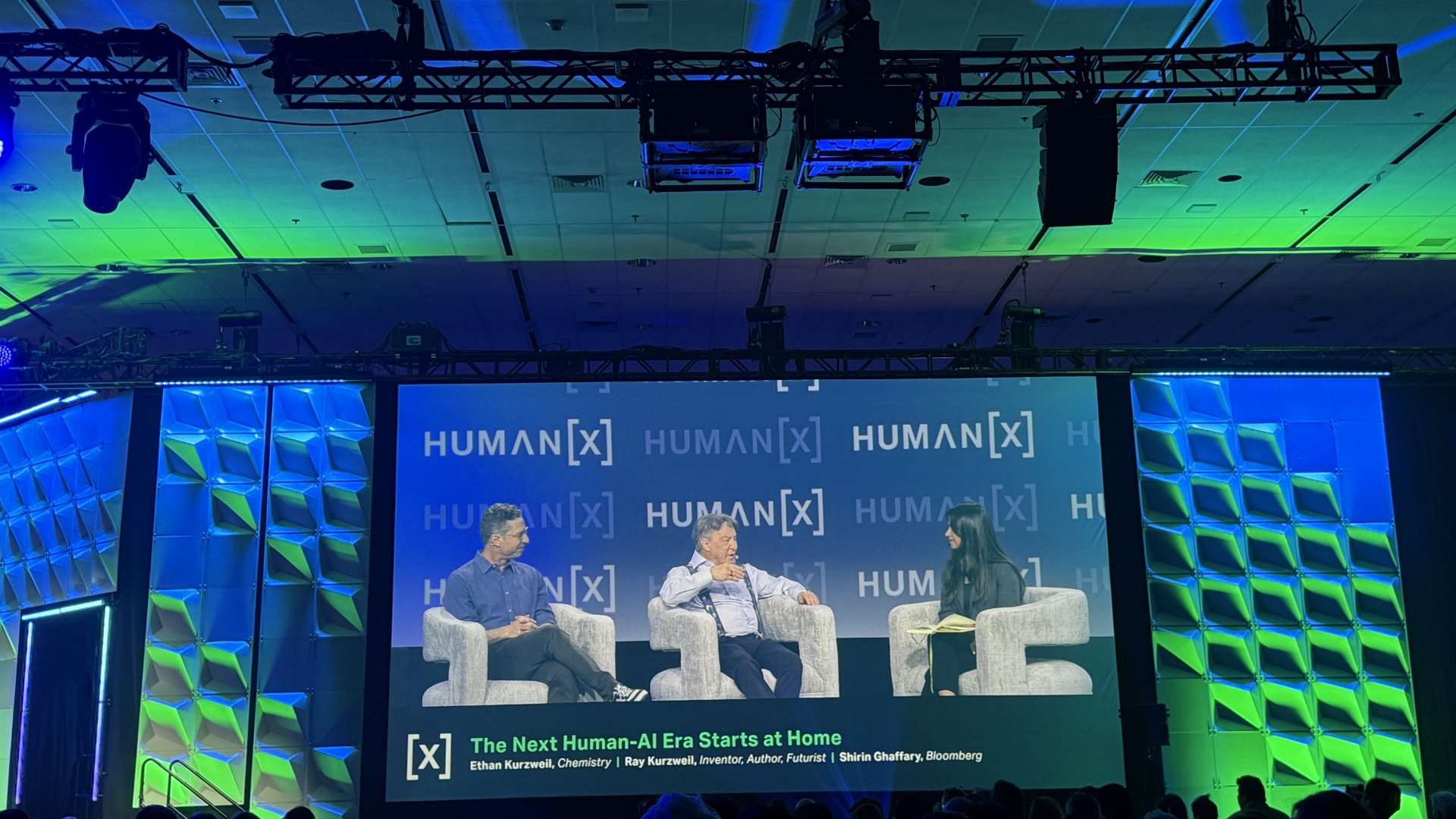
At HumanX in San Francisco this week, one thing became very clear: the AI conversation is moving on quickly.
It is no longer just about content generation, productivity hacks or whether businesses should be “using AI”. That question has already been answered.
The more useful conversation now is this: where is AI genuinely creating value, and what should small businesses actually do with it?
Across the conference, speakers from companies including NVIDIA, Perplexity, Fireworks AI, Anthropic, Canva, Snap and Lovable all pointed to the same broader shift. AI is becoming less about isolated tools and more about how businesses are built, how teams work, how brands connect, and how decisions get made.
For Enterprise Nation members, that matters because while much of the AI conversation can still feel dominated by large tech firms and venture-backed start-ups, the real opportunity is increasingly practical. Small businesses do not need to build the next AI model. But they do need to understand how this technology is changing customer expectations, workflows, competition and growth.
AI is becoming more capable, but adoption is still uneven
One of the most interesting tensions at HumanX was this: the technology is accelerating rapidly, but most people and most businesses are not moving at the same pace.
Several speakers talked about how AI has evolved in waves. The first was generative AI, tools that could create, summarise and translate content. The second was reasoning and research, where models became better at handling context and producing more useful outputs. The next wave, which was repeatedly mentioned in sessions from AWS, Anthropic, Fireworks AI, and Perplexity, is more agentic. In simple terms, that means AI that not only generates an answer but can also help carry out a task.
That is a major shift.
And yet, despite the pace of innovation, there was also honesty on stage about how much of the market is still early. Denis Yarats, CTO at Perplexity, made the point that user adoption is still where the hype can run ahead of reality. Cameron Adams, co-founder and CPO at Canva, echoed that in a different way, noting that large parts of the population are still not using AI meaningfully at work.
That is important for small businesses because it means there is still time to learn, test and adopt with intention. It also means the businesses that move from experimentation to practical use now are likely to create a meaningful advantage over the next 12 to 24 months.
The biggest opportunity is not building AI, it is applying it well
One of the clearest takeaways from HumanX is that many of the best AI products for business probably have not been built yet, but there is already huge value available through the tools and workflows that exist today.
That came through in sessions on enterprise adoption, customer journeys, marketing, product design and team productivity. Whether it was Snap discussing how it thinks about AI for the workforce, AI for the business, AI for the community and AI for the product, or Kate Prouty talking about how AI is changing the full customer journey, the message was consistent: AI works best when it is embedded into how a business operates, not treated as a one-off experiment.
For small businesses, that is good news.
Because the most valuable use cases are often not the most technical. They are the most practical. They sit in the parts of the business where time is lost, customers wait too long, data is underused, or teams are doing repetitive work that should already be easier.
This is where smaller businesses can often move faster than larger organisations. They have fewer layers, less bureaucracy and a clearer line of sight between a problem and a solution.
What small businesses should take away from this
Rather than trying to “do AI” in a broad or abstract way, the better approach is to focus on where it can make a meaningful difference first.
That might include:
speeding up customer service and response times
improving marketing content and campaign planning
reducing admin and internal process bottlenecks
summarising meetings, notes or customer feedback
supporting research, sales preparation or operational planning
The businesses that benefit most are unlikely to be the ones using the most tools. They are more likely to be the ones using a few tools consistently and with a clear purpose.
The brands that win will be the ones that stay human
One of the strongest sessions of the week focused on brand strategy in what was described as a post-platform era. The conversation touched on a tension many businesses are starting to feel: if AI allows you to personalise and distribute content at scale, how do you do that without losing what makes your brand distinctive in the first place?
That question matters for small businesses just as much as it does for media companies or global brands.
A useful insight from that panel was that the businesses performing best are not necessarily those producing more content. They are often the ones getting better at distributing it more efficiently, more personally and more intentionally.
But there was also a warning that personalisation alone is not enough. If it becomes too bland, too transactional or too detached from what people actually care about, it loses its impact.
That was reinforced by Cameron Adams at Canva, who spoke about creativity as a journey rather than a single prompt. He argued that while AI can accelerate output, it cannot replace the judgement, empathy and cultural understanding that make work resonate with people.
For small businesses, this is a very relevant reminder. In a world where more businesses will have access to similar tools, brand, trust and emotional connection become more valuable, not less.
Three brand questions worth asking now
If you are already using AI in your marketing or content workflows, it is worth asking:
Are we using AI to make our brand more useful, or just more efficient?
Are we still sounding like ourselves?
Are we helping customers feel understood, or just better targeted?
These are not small questions. Over time, they may become the difference between businesses that feel memorable and businesses that feel interchangeable.
People are still the real differentiator
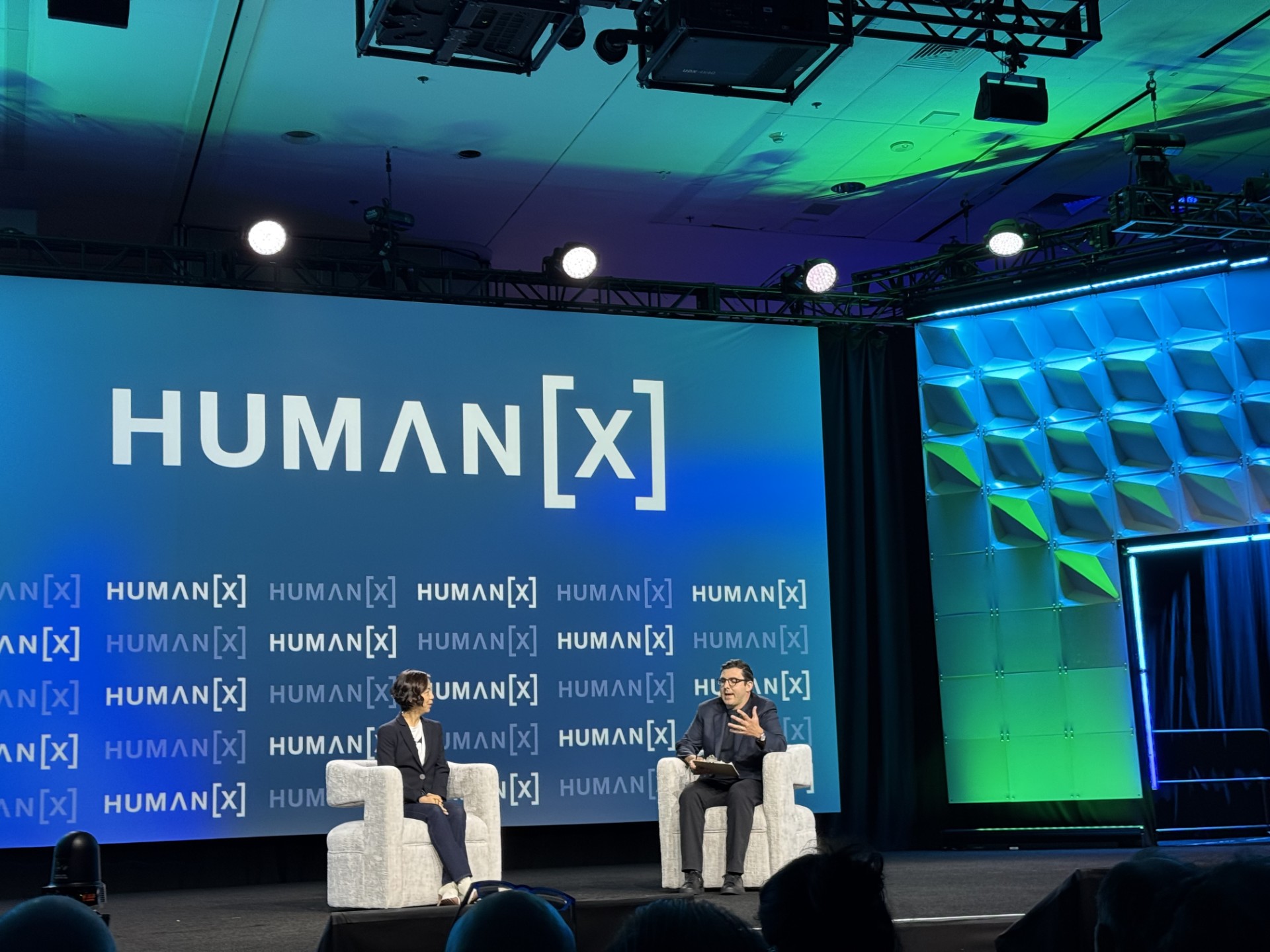
Another consistent theme across HumanX was that as AI reduces the barriers to building, writing, coding and shipping, the value of the right people only becomes more important.
Anton Osika, co-founder and CEO of Lovable, spoke openly about what he had learned while scaling. One of his reflections was that he wished he had brought more commercially minded people into the business earlier. But more broadly, his point was about “DNA” and what businesses should really be hiring for in this era.
His view was that the most important thing is not just what someone can do, but why they care. What motivates them, where they have put energy in their life, and whether they are genuinely there for the right reasons.
That may sound like a start-up founder insight, but it has real relevance for small businesses.
As AI tools make it easier to automate tasks and increase output, the differentiator increasingly becomes the people making judgement calls, building relationships, understanding customers and spotting opportunities.
In other words, AI can improve execution. But it does not replace clarity, curiosity, commercial instinct or care.
What this means for business owners and team leaders
As you build or evolve your team, it may be worth thinking less about whether someone has “AI experience” and more about whether they have the mindset to work effectively in an AI-enabled business.
That includes people who are:
adaptable and open to change
commercially aware and customer-focused
willing to experiment and learn
thoughtful about where AI helps and where human judgement still matters
For many small businesses, the next competitive edge may not come from hiring an AI specialist. It may come from helping existing team members become more confident and capable in using AI well.
The future of AI needs to solve real-world problems
Among the most thought-provoking sessions of the conference was Dr Fei-Fei Li’s talk on what comes next for AI.
She spoke about moving “from words to worlds”, describing how much of today’s AI is still rooted in language, while future breakthroughs will depend on systems that can better understand space, movement, environment and context. Her framing of current AI as “intelligence in the dark” was a powerful reminder of both how far the technology has come and how early we still are.
That session, along with Al Gore’s remarks on sustainability and what we choose to hyperscale, brought the conversation back to a bigger point.
The future of AI is not just a technical question. It is a societal one.
What problems are we trying to solve? Who are we building for? And how do we ensure the benefits of this technology are felt beyond the already digitally confident, well-funded or highly connected?
For small businesses, that question matters too. Because the strongest businesses of the next decade are unlikely to be the ones simply adopting AI because it is trending. They will be the ones using it to solve something real for customers, teams and communities.
A final thought for SMEs
There was no shortage of excitement at HumanX, and rightly so. The pace of change is extraordinary, and the opportunities are real.
But if there was one message that felt most useful for small businesses, it was this:
You do not need to chase every development. You do need to understand where AI can create meaningful value in your business, and where your human strengths still matter most.
That means thinking carefully about your team, your customer experience, your brand and the problems you are best placed to solve.
Because in the next phase of AI, the businesses that win are unlikely to be the ones that sound the most futuristic.
They will be the ones who use the technology well, stay close to their customers, and keep building with clarity.

Make your small business more productive with the free Tech Hub tool
Get tailored recommendations, join virtual workshops, connect with expert advisers and find practical resources. Take me to Tech Hub now
Get business support right to your inbox
Subscribe to our newsletter to receive business tips, learn about new funding programmes, join upcoming events, take e-learning courses, and more.
Start your business journey today
Take the first step to successfully starting and growing your business.
Join for free