Over the past 15 years, public innovation grants worth almost £20 billion have gone to more than 12,000 UK businesses. Beauhurst tracked what happened to them next.
Almost four in 10 are still trading but have not raised further equity, been sold or listed, or shown clear signs of scaling.
That is more than 4,500 businesses. They still innovate, employ skilled staff and hold valuable intellectual property. NatWest calls them the “untapped innovation cohort”.
Every nation and region has them. London has the lowest share at 32% and the West Midlands the highest at 47%. In the South East, South West and East Midlands, more than four in 10 grant-backed firms are in this group.
Repeat backing appears to help. Of firms that received one grant, 19.7% went on to raise further equity. Among firms that received four or five grants, the figure was 35.7%.
What holds founders back
NatWest interviewed businesses across the country. They named three things: faster routes to market, stronger local networks, and the capabilities to scale, such as finance, leadership and commercial skills.
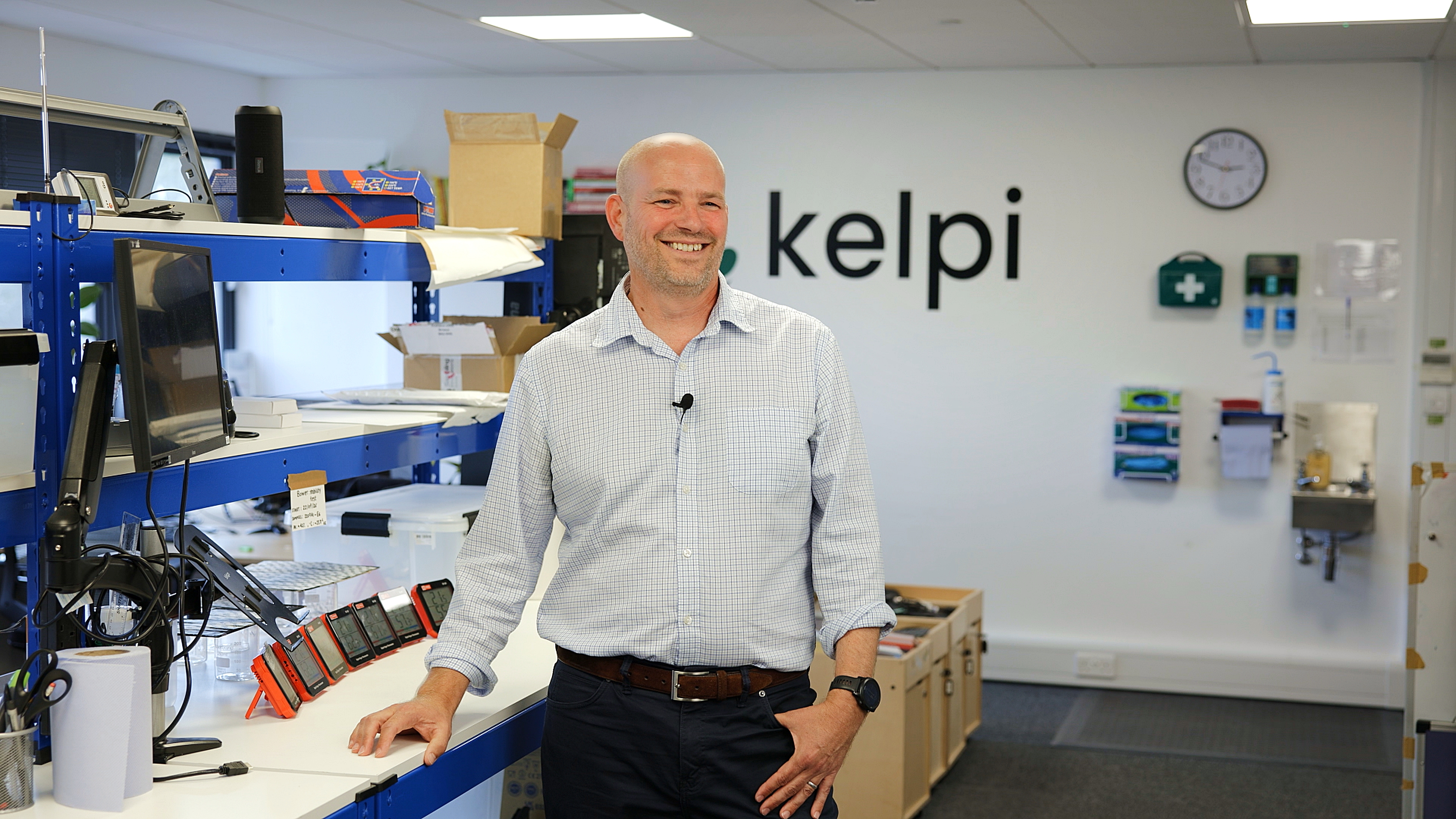
Kelpi in Bristol has hit the first of these. The company makes a seaweed-based coating that replaces the plastic layer in paper and card packaging. It employs 19 people, works with L'Oréal and Amcor, and has raised more than £7 million in private investment.
Its coating needs food-contact approval before it can go on food packaging. The United States decides within a fixed 120 days, and Kelpi cleared that process in August.
UK and European routes can take years, with far less certainty about timing.
Kelpi’s CEO Hugo Adams said:
"Time is our enemy because we're constantly working against a declining cash runway."
Electech, a business-led electronics cluster of 40 organisations across Lancashire and South Cumbria, has tackled the second.
Its members struggled to recruit, so they worked with two colleges and Tech Lancaster to design an electronics bootcamp. More than 100 people enrolled and 43 moved into jobs or up in their careers.
Jane Moorby of Oxley Group, a member, explains why it worked:
"A university or a college won't put a course on for one company, but it will for 30 companies."
What we are asking government to do
Enterprise Nation supported NatWest in developing the report’s five recommendations. Two are for Westminster, and three are for combined authorities.
Shift more innovation funding towards commercialisation over the next decade. BIST, UKRI, Innovate UK and the British Business Bank should adopt a single scorecard, reported to Parliament each year, that tracks follow-on investment, first sales, exports, manufacturing capacity and skilled jobs.
Create a fast-track regulatory pathway for high-growth firms in the eight Industrial Strategy sectors. Firms should get decisions within 100 days and one named lead who coordinates every regulator involved.
Give every combined authority a single front door that routes innovative firms to the right support at each stage of growth, and publish the results each year.
Pay for the people who make clusters work from mainstream economic development budgets. Every combined authority should partner with a complementary cluster elsewhere in the UK by the end of 2027.
Spend most regional innovation money on the sectors named in each area's Local Growth Plan, and publish the share each year.
What our own data says
Aaron Asadi, chief executive of Enterprise Nation, said:
"NatWest's findings mirror exactly what our own Small Business Barometer shows. Confidence to grow has become fragile, with only 41% of small business owners now feeling confident about expanding, down from 50% a year ago, with funding appetite falling even further.
"Our data also shows just how much this varies by region, with funding demand topping 60% in some areas and dropping below a quarter in others, a pattern that lines up closely with NatWest's own findings on regional commercialisation gaps. A founder's chances of turning ambition into commercial scale still depend far too much on their postcode.
"Closing that gap means pairing national investment with the kind of hands-on, local support that helps businesses convert potential into growth, wherever they're based."
What happens next
NatWest has also launched a 12-week Accelerator programme with the University of York's Life Sciences Incubator. It will work with up to 10 academics, most of whom have already spun out a business and want to raise investment or grow revenue.
Enterprise Nation will put the five recommendations to ministers and officials over the coming weeks. We will report back on what they say.
Join NatWest Accelerator for free access to a nationwide founder community, co-working hubs and events – plus expert support when you need it. Sign up now
With 10 years' experience working in politics, developing policy and leading strategic campaigns, Daniel Woolf leads on policy and government relations for Enterprise Nation.
Daniel began his career leading on health and policing and crime policy at the Greater London Authority while advising London's Deputy Mayor. He then moved to the CBI to lead its work on infrastructure finance. Most recently, Daniel played a leading role in AECOM's Advisory Unit, providing political and strategic policy advice to government bodies.
)