From allergy-safe doughnuts to prime-time TV: How Borough 22 won Black in Business
To view this video, please accept marketing cookies.
Posted: Thu 29th Oct 2026
17 min read
Ryan Panchoo started London-based Borough 22 because his young children, who had multiple allergies, kept missing out on the treats their friends were enjoying.
Today, the business makes doughnuts, brownies, puddings and cookies that are free from the top 14 allergens. It runs a concession in Selfridges Food Hall London, a pop-up in Selfridges Birmingham and delivery sites across the capital.
In August 2026, Borough 22 was named one of four winners of Channel 4 and Lloyds' Black in Business initiative. The prize includes £200,000 of Channel 4 advertising airtime, a professionally produced TV advert, and mentoring and marketing support.
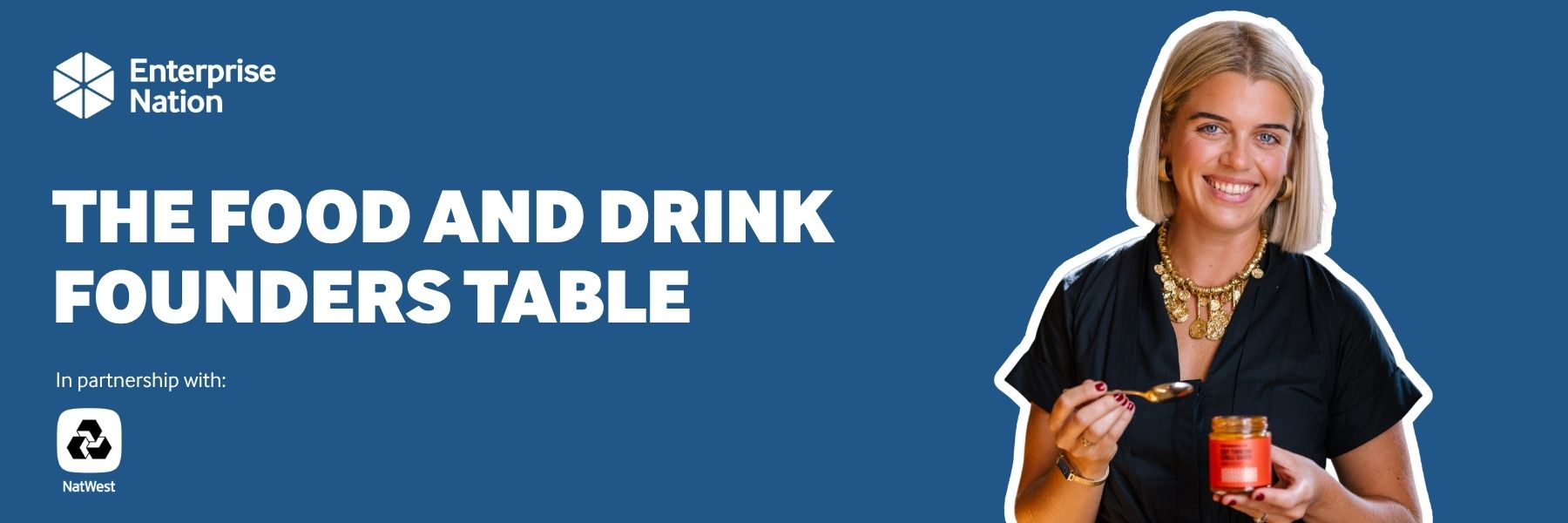
At a recent Founders Table session, Ryan joined Leisa Pickles, ambassador for Enterprise Nation's food and drink founders hub. He shared how he won, how he's preparing for the extra demand and what other founders can learn from his journey.
Safe, beautiful and delicious: The three pillars behind the brand
Ryan's starting point was a problem he faced as a parent. Finding treats his children could safely eat was hard, and the products that did exist rarely lived up to their promise.
He says:
“Anytime we took them out with their friends or family, there'd always be some kind of treat food involved, and they'd just be excluded. They'd see this amazing food that their friends were eating, and they wouldn't be able to eat it. They were isolated in those moments.
“And then if we were able to find something that was multi-allergen free, it just was really expensive, and it tasted awful.”
Those frustrations became the three pillars Borough 22 is built on. First, every product has to be safe. Second, it has to look so good that friends want to share it too, so nobody feels left out.
The third pillar – and the hardest to get right – is taste. Ryan wanted his treats to match, if not beat, their gluten- and dairy-containing counterparts.
“We'd find this product. It looks great, and then you eat it, and it just doesn't taste as good. It's always sort of subpar, and it always seems to be beige,” he explains.
As Leisa pointed out, visual appeal is what makes a customer pick a product up, but taste is what brings them back.
For Borough 22, the two have always had to work together.
A range built around inclusion
Borough 22's hero product is its yeast-raised fried doughnut, available in classics like jam, custard, original glazed and Boston cream. Twisted yum yums are among its bestsellers.
The business started with baked doughnuts, which it still makes today. Perfecting an allergen-free yeast-raised dough took Ryan around eight years.
The range has since grown to include brownies, apple and cherry crumbles, cookies, and banana and tiramisu puddings. Everything is free from the top 14 allergens, and the kitchen handles only soya and sulphites.
The products are also halal and kosher certified.
Ryan says:
“We wanted to make them as inclusive as possible. And that's something that's grown as the business has grown, just to make them available to as many people as possible without exclusion.”
Customers can buy in several ways. Online sales make up around 30% of the business, with next-day delivery across mainland UK and Northern Ireland.
Borough 22 has had its own concession in Selfridges Food Hall London since 2024, and a pop-up in Selfridges Birmingham runs until the end of the year. It also sells through Deliveroo from five delivery sites across London, including its main kitchen in Brockley.
Why Ryan entered Black in Business
Ryan first heard about Black in Business when a friend's Jamaican patty brand won the previous year. Seeing what the opportunity did for that business made him want to try for it.
Black in Business is a competition rather than an award, and it's now in its third year. The airtime prize has grown from £100,000 in the first year to £150,000 in the second and £200,000 this year.
Ryan felt the timing was right. Borough 22 had grown rapidly in the three years since launching as its own entity, but he kept meeting people who'd never heard of it.
At free-from events like the Allergy & Free From Show at the NEC, people still run to the Borough 22 stand before it sells out. Yet many of them are trying the brand for the first time.
He explains:
“I knew that although we are very popular – we've won a whole host of awards, baking industry awards, free from food awards – there's still so many people that don't know we exist. So I just thought what an amazing opportunity to be on TV and to be able to amplify that message.”
In his pitch, he compared it to being an Arsenal fan at the Emirates Stadium:
“I could stand up in my seat and tell everybody to shout about Borough 22, and maybe 50 people deep would hear me. But if I was to put it on the jumbotron and get it over the PA, suddenly everybody's exposed to it. That's the power of TV.”
Ryan didn't enter just to take part. He went in confident that the business, its story and its need to reach more people made it a strong contender.
“I'm entering because I believe we can win it. I actually knew we could win it.”
Inside the application process
The process started with a written application, which Borough 22 submitted the moment it opened. That speed came from years of entering awards and competitions.
Ryan says:
“We've applied for a lot of awards. We've applied for a lot of competitions. So we have a bank of information from those submissions that we keep. So for us, it is really, really easy to answer questions.”
As Leisa noted, every application builds on the last. Even if you don't win, you refine your answers each time and can respond faster when the next opportunity comes up.
Next came an interview and a recorded video interview. Applicants saw each question, had time to prepare and then got three timed attempts to record their answer – with no redos after the third.
“You imagine a business that's been running for three years. How do you cram that into five minutes?”
Nine finalists were then invited to pitch at Channel 4's offices in Victoria, central London. The panel included people from Channel 4, Lloyds and Quiet Storm, the production company behind the adverts, as well as compliance specialists.
Ryan admits the nerves still kicked in, but his preparation carried him through:
“My mouth was drying out. My voice was a bit shaky, but I knew what I wanted to say. It's like I'm being asked to retell what has happened in the life of our business. So from that point of view, it was really cohesive.”
The panel didn't scrutinise the numbers Borough 22 had submitted. Instead, it asked whether the business was profitable, whether free-from is more expensive to run, how Ryan would manage cash flow as he scaled and whether he'd take on debt or investment.
Ryan credits his team with helping him answer confidently.
He says:
“If I didn't build a team of people around me who are experts in those particular fields, and we'd had those questions as a team, then I wouldn't have been able to answer those questions.”
Finalists filmed footage as if they'd already won, and Ryan found out the same week. He was allowed to record his pitch and has since shared the panel's questions on his founder Instagram account to help future applicants.
Why your story sets you apart
The feedback Ryan received focused on the strength of his pitch and his personal story. He's retold it many times, and he's found that people become emotionally invested as soon as they hear it.
His advice to camera-shy founders is to get in front of the camera anyway.
“I always say people buy from other people. They wanna know. Everybody loves a good story. It's why television and film and cinema are so popular, because they're retelling stories.
"And when it's real life and you're seeing it unveil before your eyes, it's even more compelling.”
Ryan runs two Instagram accounts: one for him as a founder and one for the brand. It started by accident, when his original account was hacked, and he had to rebuild the brand account from zero.
The brand account has since overtaken the founder one, but keeping both has its benefits:
“Some things are individual to me as a founder and the journey.
"I'm not a business person. I'm not from that background, but I've had to learn everything. And people like to see that aspect of it, and then there's other people who are all about the brand.”
Preparing for a surge in demand
Ryan doesn't yet know exactly how much exposure the campaign will bring. But he knows from his own paid ads how spend affects website sessions, orders and revenue – and that the previous winner sold out completely.
“Through Channel 4, it's just such a massive version of that. It's like a monstrous version of what we do in-house, really,” he says.
The business is already preparing for December, which is always its busiest month. That means bringing in more staff and restructuring how work gets done.
He explains:
“Just to make sure that we have systems in place – people coming in to do specific jobs and not someone coming in to do something from start to finish. So breaking it up into more like a factory operation, just to make it easier for us to be able to handle.”
The website is where Ryan expects the biggest impact, so he's using tools to manage orders. Borough 22 can set delivery days, cap the number of orders, run waiting lists and take pre-orders well in advance.
The Selfridges London concession is close enough to the kitchen to top up stock during the day if needed.
For Ryan, though, managing customer expectations matters most:
“It's all about communication. If people know that this is the limit, we've got x amount of slots available, this is us working at our capacity, then everybody's informed.
"You'll get people who'll be disgruntled, but then they're not your customer, and that's okay.”
Ryan was also told that a TV ad slot can cost anything from £30 in the middle of the night to around £100,000 during a programme like the Great British Bake Off final. That means the £200,000 could be spent in one week or stretched across several months.
He's left those decisions to Channel 4's sales and marketing team, whose support he values even more than the prize itself:
“They came to the kitchen here as well to see everything in action and talk about how we can use that ad spend.
"The support is unmatched. And that for me is bigger, perhaps, than winning the prize.”
Making the advert
Ryan gave Channel 4 a clear brief: raise awareness of Borough 22, grow website revenue and reach his target customer. The 30-second advert has now been filmed, though the details are under embargo.
He describes being on set as a humbling experience:
“To walk onto a set and see it branded as your brand, and to have maybe 30, 40 people running around to make this thing come to life – and to be able to feed all those 40 people and to have people so excited and buzzing because the product looks amazing.”
Ryan's head of operations and two friends of the brand took part, and the cast includes an actress who played Tina Turner in the West End.
For Ryan, it was a moment that showed what entrepreneurship can look like.
The four winners' adverts will be showcased from the week commencing 11 January 2027. The campaign will also run on Channel 4's digital platforms and on Channel 4 +1.
“I know a lot of people nowadays, the generations that are coming up, they're more mobile consumers as opposed to traditional TV consumers. So it just fits every single model,” he says.
When Leisa asked about a watch party, Ryan admitted he hadn't thought that far ahead.
Pausing to celebrate is something he's still learning to do. He says:
“I guess the curse of an entrepreneur is, you're like, what's next? What's next? It's hard for me to stop and appreciate those moments. It's something I've had to try and learn to do, and just reward myself for achieving what I've achieved at these various milestones.”
What's next for Borough 22
Ryan's immediate priority is to get through December and have a strong February. Valentine's Day is Borough 22's biggest day outside the festive season.
He's also developing products with a longer shelf life, with interest already coming in. That could open doors to food service and prepackaged products in places like airports and train stations.
“There's not a lot of stuff like what we do that is available to everybody in certain places where people will find themselves, where they can pick up something that is suitable for them," he says.
"And then equally, someone who doesn't have any allergies can pick up something, and they're not gonna be disappointed.”
Ryan hopes to turn the Birmingham pop-up into a permanent concession, and he sees plenty more to do in London.
Longer term, he sees Borough 22 as a global brand, with Ireland a possible next step.
Ryan's advice for food and drink founders
1. Know your why
For anyone thinking about starting a food and drink business, Ryan's first piece of advice is to be clear on why you're doing it:
“There's some moments where you think, what am I doing? Why am I putting myself through this pain? And it's that why that is the thing that will get you through those moments.”
2. Get out there and test your idea
Once you know your why, Ryan recommends proving your concept, starting with social media.
If you don't want to be on camera yourself, ask friends and family to help:
“All you need is a phone with a camera on it, and you need your handle to get started. You need people to buy from you. Get out there. Put it out on social media.”
3. Get your house in order before you apply
Before applying for competitions, grants or funding, make sure you could handle the opportunity if you won.
Ryan says that means having your paperwork, standard operating procedures and clearly defined staff roles in place:
“You don't wanna win the prize and then take two steps, stumble, and that prize just smashes on the ground. You have to be able to be in a position to take it and really run with it.”
He also recommends good accounting software and using AI to take on the repetitive admin that founders often get stuck with in the early days.
4. Hire for one clear task first
Ryan started hiring when he simply ran out of hours in the day.
He admits asking for help didn't come easily, but he found a way to test each new role without overcommitting:
“Don't ever employ someone in that bigger role. Give them one single task and give them, like, 60 days.”
If they deliver, you can expand their role with short 30-, 60-, or 90-day goals.
His tip is to hand over the tasks you hate most to someone who enjoys them – for Ryan, that was the accounts.
5. Learn to step back
Asked about his biggest challenge, Ryan's answer was simple: himself.
Having done every job in the business, letting go was hard – and standard operating procedures made it possible:
“Someone should be able to leave the business, go on holiday, someone pick up a piece of paper, and these are the things that this person does every day, and they can just pick it up and run with it.”
Stepping back has given him time to focus on growing the brand, and it's made a visible difference to how he feels.
He says:
“It just means that you get some of your life back. You get re-energised as a founder, and people get the best out of you. And if people get the best out of you, that's gonna hopefully filter down throughout the company.”
The November Table
Want to learn from more food and drink founders? Join Enterprise Nation's Founders Table, a monthly online session where founders discuss real challenges in the industry and share practical solutions. Sign up now.
I’m the Founder and Chief Go Getter at Find me the Leads®, an independent sales consultancy helping food and drink producers get their products into farm shops, delis and garden centres.
Through our done-for-you outreach programmes, we connect brands directly with decision-makers — generating conversations, sample requests and real opportunities to get products onto shelves.
With over 25 years’ experience in sales, including time at Mars Incorporated, I set up Find me the Leads® in 2018 to give small businesses access to the kind of proactive sales support usually reserved for larger brands.
I was named Enterprise Nation Sales Adviser of the Year for the UK and Ireland in both 2022 and 2024 and I am the Leader for the Nottinghamshire Small Business Meet Ups.
I’m also the best-selling author of The Only Sales Person in the Room – 52 Ways for Small Business Owners to Master the Art of Selling, where I share practical, straight-talking advice to help business owners build confidence and take action in their sales.
Alongside my consultancy work, I share practical sales insight through mentoring, workshops and my podcast, helping founders take control of their own sales process with confidence.
When I’m not on the phone opening doors for clients, you’ll usually find me out walking my Miniature Schnauzer, Buddy or in an independent coffee shop with a flat white and a slice of coffee and walnut cake ☕