Growth on hold: The year rising costs swallowed small business growth plans
Posted: Thu 10th Sep 2026
13 min read
More than three in four high street businesses shelved a plan to grow this year. The money set aside for a new hire, new equipment or a push for customers went on bills instead.
That is the headline finding of Growth on hold, our new report with Square and EDF Small Business, published today.
We asked 526 small businesses across the UK what this year cost them and what would help. Their answers now sit in front of ministers ahead of the Budget on 28 October.
"This data shows a small business community that has done everything asked of it and is still being ground down by cost after cost stacking up at once."
"Businesses aren't asking for a bailout. They're asking for decisions: say at the Budget whether hospitality VAT will be cut, aim the promised rates relief at the smallest premises, and make the support that already exists actually reach businesses.
"Without that, we will keep seeing owners forced to shrink businesses they've spent a decade building."
Seven costs land at once
Six in 10 put VAT in their top three pressures, and six in 10 put wages there. Employer National Insurance, supply costs, business rates, energy and rent followed close behind.
Nearly two-thirds of businesses (64%) now see the UK as a harder place to operate than its European peers.
Most small businesses carry several of these costs together, so relief on any one leaves them paying the rest. A café that cuts its energy bill still faces the rates bill. That is why help aimed at one cost keeps falling short.
Gabriel Larraz left investment banking to open Broken Eggs, a 30-seat Spanish restaurant in Fitzrovia. It now employs 14 people, the tables are full, and the reviews are excellent.
"When I look at our profit versus last year, the amount of volume that we've grown this year has basically all gone to paying extra costs," he says.
"It's not one thing that's changed. It's the national minimum wage, employer contributions, business rates, energy costs. It's a double hit: your direct costs go up, but all your inputs go up as well because your suppliers are facing the same pressures.
"The most annoying thing is that it keeps changing all the time. Tell me these are the rules for the next five or 10 years and I can plan my business."
Increased costs swallowed growth plans
69% had delayed or cancelled a growth plan to cover rising costs. Half had cut investment. 27% had thought about closing.
Businesses with 10 or more staff were squeezed hardest. 79% had delayed growth, and 55% had cut customer-facing staff. Most of them were in hospitality.
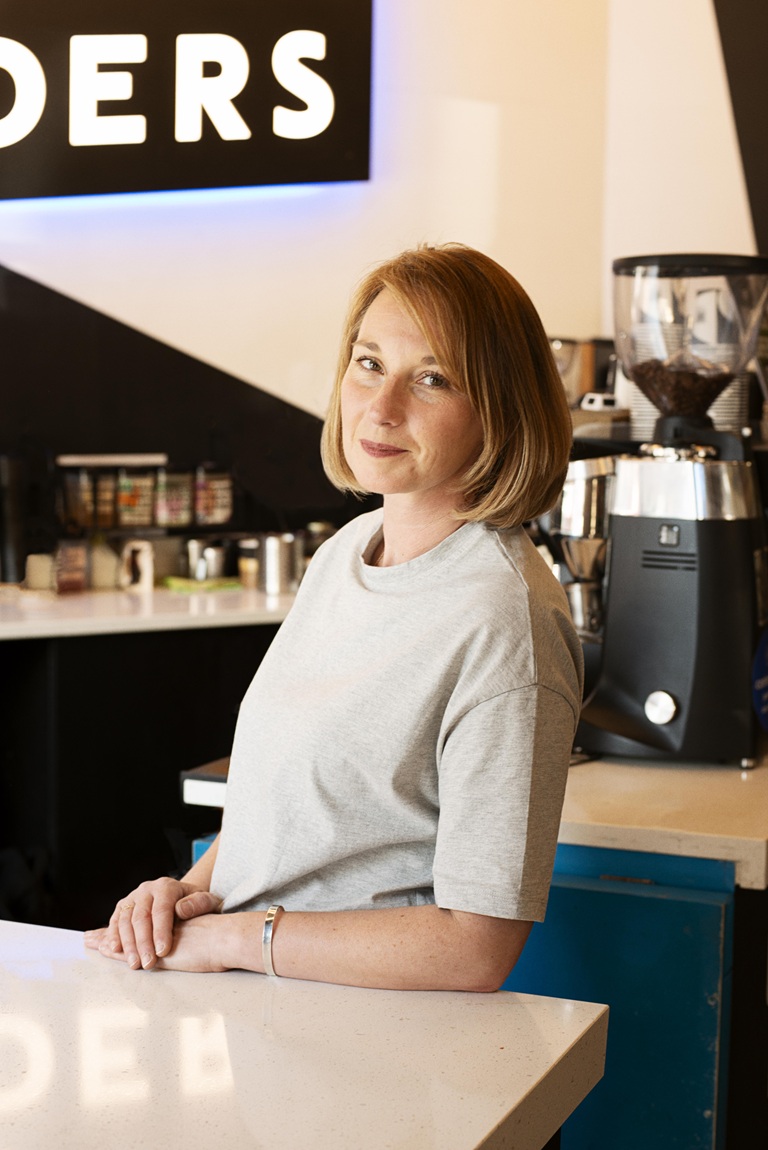
Victoria Cozens knows exactly what that squeeze feels like. She built Perky Blenders from a one-kilo roaster in her North London garden into a six-shop independent coffee chain employing 40 people, alongside her husband Adam.
"Two years ago, on paper, we looked like we were on a really good route to franchising and opening more stores," she says.
"We started that process, and then the changes came in: Employers National Insurance, related wage increases, and more recently the extraordinary increase in business rate costs, especially for hospitality."
ENI alone has cost Perky Blenders more than £20,000 extra a year since 2024, and roles once covered by specialists in marketing, customer service and fulfilment now fall to Victoria and the wider team.
It has also squeezed what she can pay the people on the shop floor.
"We've always tried to pay above the minimum wage for our barista roles," she says. "With the increases in costs across the business, especially ENI, it has been hard to support the people we care about the most.
"You can be an owner-operator and find ways to make it work, but if you want to operate multiple sites, grow your business and employ more people, that has become so much more challenging."
Confidence about cash flow told us more than size or sector did. Among businesses not confident about the year ahead, 86% had delayed growth, and 48% had considered closing.
The full report shows where sole traders, micro businesses and larger employers part company on costs and on what they want from government.
The high street took the hardest hit
Two thirds of high street businesses pay business rates, against one in five elsewhere.
That is why they cut deepest. 77% delayed a growth plan, 58% reduced investment, 42% cut customer-facing staff, 28% cut opening hours and 31% considered closing.
The government's own guidance records that around one in seven shops are empty nationally, and among the businesses we surveyed, more than one in five owners (22%) say over a quarter of their nearby shopfronts now stand empty.
69% said incentives for landlords to re-let empty units at reduced rents would make a meaningful difference to their local area.
Louise Miller-Chalk opened Miller & Chalk, a luxury homeware brand, on Towcester High Street in February. Two properties meant two rates bills, so she shared the shop with Cécile Harris of The Slow Life and split rent, rates and wages. A third business moves in this month.
"You can't be a traditional shop anymore," she says. "You need to think outside the box."
But easing one pressure has revealed another. By the end of the year, Louise expects to cross the £90,000 VAT threshold, putting 20% VAT on everything she sells.
"As soon as you start to get somewhere, there's something else you've got to pay for," she says. "I've got to get past this VAT threshold as quickly as I can because I'm going to be losing a little bit of profit on each product."
What a VAT cut could do
High street businesses asked for a lower VAT bill first. 54% chose a cut in the standard rate as the one change that would help most. Away from the high street, and among sole traders, grants topped the list.
We asked what businesses would do if the government cut hospitality VAT. 46% would absorb other rising costs and 44% would invest in the business. 29% would hire, and 23% would lower prices.
Employer National Insurance alone costs Perky Blenders over £20,000 more a year than in 2024, and the team has shrunk.
"A reduction to 10% would give us some breathing space," Victoria says. "It's not about putting more money into business owners' pockets."
Cash flow drains away while you wait to be paid
Away from the high street, 41% were paid mostly by bank transfer or invoice. Late payment costs the economy almost £11bn a year and closes 38 businesses every day.
"Many of Britain's small businesses are not standing still by choice; rising costs on all fronts have stifled the opportunity to grow," says Robert White, executive director and head of payment partnerships at Square UK.
"The heaviest of those pressures, VAT, National Insurance contributions, business rates – are ones only government can address. The small businesses on the front foot are those with the clearest sight of their money and quickest access to capital."
Finance is the other drain. Access to capital, tied with energy and overheads as the biggest single barrier to growth, named by 29%. Around 130,000 small businesses apply for a bank loan each year and roughly half are declined.
Help exists, and most of you have never had it
Only 24% had ever had expert guidance on managing energy and financial health.
Only 25% knew grants for efficiency upgrades exist. 45% said energy price rises had cut their margins by at least a tenth in six months, and on average, businesses that could put a number on it said energy had cut their margins by around 18%.
"Independent retailers and small businesses are the engine of our high streets, yet three quarters are unaware of the efficiency support available to them," says Claire Nutt, director of small business at EDF.
"That's a missed opportunity: even modest changes to lighting, heating and equipment can deliver meaningful savings. We're committed to helping business owners understand their options, from energy audits to available grants, so they can cut costs and protect their margins at a time when every penny counts."
Government has already built a fix. Its Business Energy Advice Service gave West Midlands small businesses a free audit and match-funded grants, and its own evaluation found the pilot paid for itself. It ran in one region only.
What we have asked government to do
None of the six recommendations asks government to start from scratch. Each builds on something it has already promised, piloted or passed.
Our asks from government:
Decide on hospitality VAT at the Budget on 28 October, and design any cut around what businesses told us they would do with it.
Raise the Small Business Rate Relief thresholds, and pilot payments to landlords who re-let empty shops at rents small businesses can pay.
Pay the next round of cost support as flat grants through councils, with registration replacing the application form.
Back more lending through non-bank and community lenders, and let lenders judge a business on its sales record.
Roll out the Energy Advice Service across England.
The report sets out how each one would work, who in government owns it, and the evidence behind it.
Raising the rate relief thresholds, for example, would take more than 140,000 small premises out of business rates at around £880m a year.
What happens next
Today we put these findings to Lord Leong, Minister for Small Business, at a roundtable of high street owners in London. The Budget follows on 28 October, and the High Streets Strategy is due this year.
Both are chances for government to act on what you told us.
If your business has a story like the ones above, tell us.
Read the full report
Read the full report to see the evidence behind each ask and send it to your MP before the Budget. View the report
With 10 years' experience working in politics, developing policy and leading strategic campaigns, Daniel Woolf leads on policy and government relations for Enterprise Nation.
Daniel began his career leading on health and policing and crime policy at the Greater London Authority while advising London's Deputy Mayor. He then moved to the CBI to lead its work on infrastructure finance. Most recently, Daniel played a leading role in AECOM's Advisory Unit, providing political and strategic policy advice to government bodies.
)