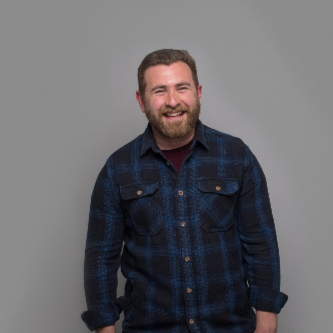
I'm Ben Lattimore, a Fractional AI Lead, software engineer and founder of Lattimore + Robots, an independent AI engineering studio.
I help businesses and organisations make AI work in practice. That means everything from identifying opportunities and making sensible technical decisions to building useful AI systems and helping teams actually use them.
A little about my background
I've spent over a decade designing, building and delivering software, including running my own digital agency, managing a team of developers and working with clients ranging from small businesses to international brands including the BBC, Hilton and innocent drinks.
I learned software development in the Old Ways, when building something bespoke could take months, cost a small fortune and involve far too much time trawling Stack Overflow.
Today, AI has changed that rather dramatically. I can build things in a week that would previously have taken a month.
Yet while building software has become much easier, knowing what to build, why it's worth building and how to make it genuinely useful remains just as important.
That's where I think my experience is most valuable.
How I help organisations
As a Fractional AI Lead, I provide experienced AI and technical leadership without the commitment of employing a full-time Head of AI.
For many smaller businesses, there's a growing awareness that AI could make a real difference, but nobody internally has the experience or time to work out what that actually looks like.
I can help with:
Finding opportunities: Understanding how your organisation works, identifying repetitive tasks, exploring existing data and assessing where AI might create genuine value.
AI strategy and planning: Developing practical priorities, roadmaps and realistic expectations rather than producing elaborate strategies that never get implemented.
Choosing the right technology: Evaluating existing AI products, models, platforms and suppliers, including the important question of whether you need bespoke software at all.
AI agents and automation: Identifying tasks that AI could undertake or support, from processing documents and researching information to connecting existing business systems.
Training and adoption: Helping your team develop the skills and confidence to use tools such as ChatGPT and Claude effectively.
Technical oversight: Supporting decisions about infrastructure, data protection, security, implementation costs and ongoing maintenance.
I can work alongside your existing team and suppliers, provide ongoing fractional leadership, or support a specific project from initial discovery through to implementation.
And when something needs building?
I'm still very much a software engineer at heart.
Through Lattimore + Robots, I design and build bespoke AI agents, automations and applications.
Recent projects include AI-assisted assessment tools for social care, research systems for organisations working with large collections of documents and interviews, and tools that help turn complicated public information into something people can actually use.
One project involved using AI to collect and organise several years of parliamentary funding records, before building a public research application in approximately a week. The resulting tool went on to contribute to national journalism.
I have a particular interest in organisations working with sensitive information, including social care, research and the third sector, where accuracy, confidentiality and sensible technical architecture really matter.
But I'm equally interested in helping ordinary businesses make better use of the technology they already have.
My approach to AI
I have a fairly simple philosophy: AI should make people more capable, not introduce another collection of expensive problems.
Sometimes a bespoke AI agent is exactly what an organisation needs. Sometimes an existing product will do the job perfectly well. And sometimes a couple of hours helping your team get more out of Claude or ChatGPT will achieve more than commissioning a new application.
I'm not interested in recommending technology for its own sake, and I'm quite happy to tell you when something isn't worth building.
I believe AI creates an enormous opportunity for smaller businesses and organisations to undertake work that would previously have required much larger teams and budgets.
But technology still needs human experience, judgement and a healthy dose of scepticism.
Let's have a conversation
If you're a business owner wondering where AI might genuinely help, an operations leader trying to make sense of competing tools, or an organisation that needs experienced technical support to turn an idea into something useful, I'd be happy to talk.
No hard sell, no unnecessary jargon, and no assumption that everything needs to become an AI project.
Just a practical conversation about what you're trying to achieve and whether I can help.